Must know emerging IoT Technologies for 2021

Why people are talking so much about IoT? Is IoT really future? | by Thinkwik | Medium

IoT currently is in its golden age, transforming various industries by storing and processing data in a distributed manner and making enhanced productivity.

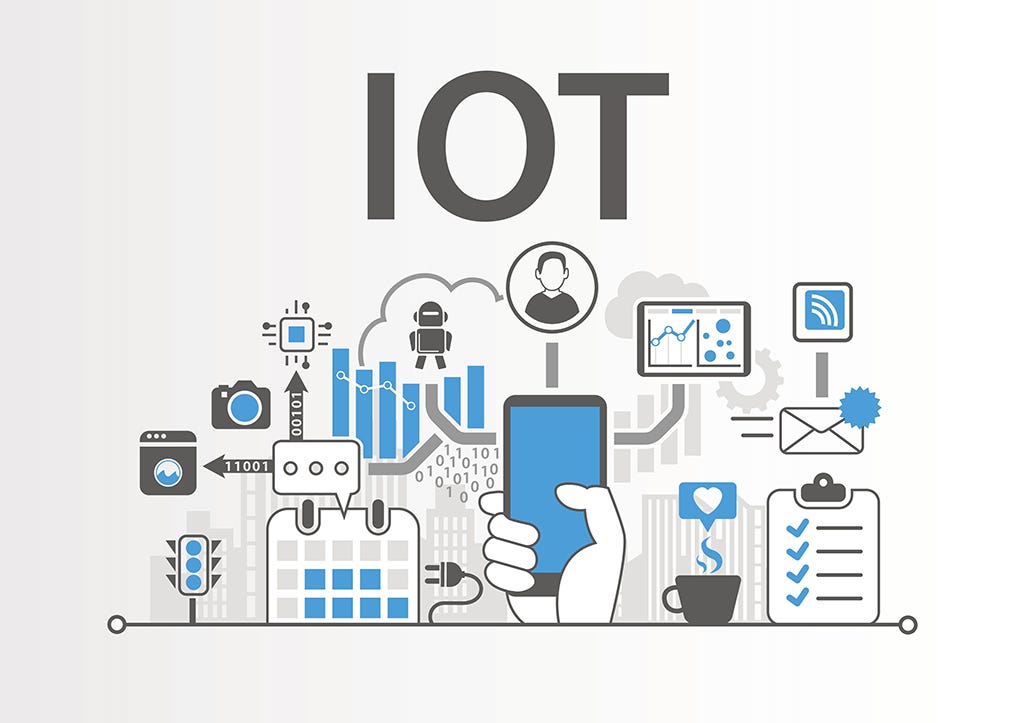
IoT is a complex ecosystem of interconnected devices that can communicate with each other. These smart connected devices are able to gather, share, and analyze information and take actions accordingly.

Research shows that there will be 35 billion smart devices online by 2021 and this number will rise to 75 billion by 2025. So, it is safe to say that IoT is growing at an enormous rate and so are the use cases, trends and technologies surrounding it.

The emerging trends in IoT are majorly driven by technologies like artificial intelligence, blockchain, 5G and edge computing. Within this interconnected web of technological advances lies in the business value of IoT applications like smart wearables, smart homes and buildings, smart cities, autonomous cars, smart factories, location trackers, wireless sensors and much more. This level of connectivity helps consumers experience a comfortable secure household that they can control and monitor anytime. IoT also promotes cost and energy savings. From a business point of view, it helps make operation management more efficient, improves productivity of the resources and reduces human labour and above all it provides vast business opportunities.

Since we are well aware about what IoT is and how it works, let us jump straight to IoT statistics that you should not ignore!

Statistics You Need To Know

  • According to Fortune Business Insights, the global internet of things market size stood at USD 250.72 billion in 2019 and is projected to reach USD 1,463.19 billion by 2027, exhibiting a CAGR of 24.9% during the forecast period.
  • The Internet of Things (IoT) market in the U.S. is estimated at US $45.7 Billion in the year 2020. China, the world’s second largest economy, is forecast to reach a projected market size of US$169.1 Billion by the year 2027 trailing a CAGR of 29.9% over the analysis period 2020 to 2027.
  • The enthusiasm for IoT adoption is not only global, but also across all industries. Among the enterprise IoT decision makers Microsoft surveyed, 85% say they have at least one IoT project in either the learning, proof of concept, purchase, or use phase, with many reporting they have one or more projects currently in use. Adoption rates are similar across surveyed countries such as, US, UK, Germany, France, China, Japan and core industries like – manufacturing, retail/wholesale, transportation, government, and healthcare.
  • 94% of businesses will use some form of IoT by the end of 2021. Among current IoT business adopters, 88% believe IoT is critical to their business success.

Now that you are aware of the facts and numbers regarding IoT, let us discuss emerging IoT trends, shall we? Past turn of events such as the unfolding of the 5G technology, latest developments in AI Blockchain, the on-going pandemic crisis will dictate the trend of IoT emerging technologies. But we cannot deny the fact that the future with IoT will be smart, secure and reliable,let’s understand how:

Top IoT Technology Trends 2021

1.  IoT security

IoT Evolution World Announces 2019 IoT Security Excellence Awards Winners

Till date, security is one of the major concerns when it comes to such an extensive level of connectivity. A security vendor has detected over 100 million attacks on IoT endpoints in the first half of 2019 alone, highlighting the continued threat to unsecured connected devices. As a result, security is an evolving IoT trend and many companies around the globe are developing IoT security solutions using different technologies. 

2.  IoT fueled with 5G technology

6 Examples of How 5G Will Improve IoT Deployments

5G technology is not just a new generation of wireless technology, it is a  foundation to release the full potential of IoT thus revolutionizing technological growth. It is without a doubt the most important internet of things emerging technology since reliable connectivity will result in better performing IoT devices. Real time data processing, lower latency, network slicing, higher transmission speed and extensive coverage are a few things that 5G brings on the table. 

3.  Blockchain 

What Is Blockchain Technology? How Does It Work? | Built In

Increased adoption of blockchain technology is one of the latest IoT trends.

Blockchain can ensure data protection in IoT devices. Blockchain allows successful interaction between multiple network nodes and ensures safe record keeping and that is why it is a great fit for IoT applications since they are also distributed by nature. 

4.  IoT enabled AI applications
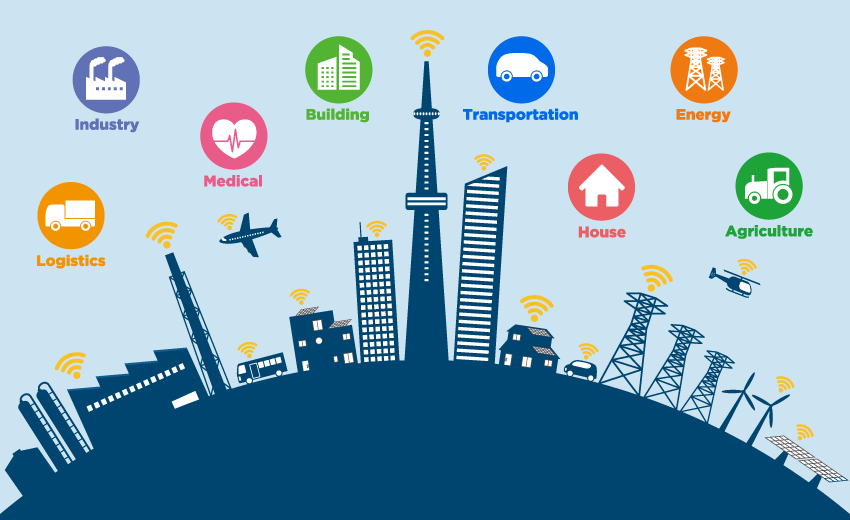
Smart City, IoT and AI | Ribera Solutions

Two very different technologies such as the internet of things and artificial intelligence can together provide commercial solutions. AI algorithms now need very less data in order to deliver good and effective results. In industries, these two technologies can help automate many processes and reduce downtime, reduce operating costs, increase efficiency and enable predictive maintenance. 

5.  Digital twins

Part One: Digital Twins Explained - Which-50

The digital twin technology trend came into limelight in 2020. A digital twin is a virtual representation that serves as the real-time digital counterpart of a physical object or process. A digital twin can be used for multiple things such as monitoring, diagnosing, optimizing and controlling asset performance and utilization. From US $3.8 billion in 2019, the projected compound annual growth rate of the digital twins market will be US $35.8 billion by 2025.

6.  Voice activated IoT devices

Voice-Enabled IoT Security Risks - Identity Management Institute®

Amazon Echo, Siri, and Google Assistant have taken voice-based user interfaces to a different level. Voice interactions will now be used in other applications across various industries that will allow us to change settings, giving commands and receiving results from our smart devices. Banks and FinTech startups have been one of the earliest adopters of voice and speech recognition technology. Another impressive development in voice recognition technology is voice biometry. It allows organizations to create a digital profile of someone’s voice, by analyzing a series of specific characteristics such as tone, pitch, intensity, dynamics, dominant frequencies, etc. Companies are confident that this process will be more secure than the methods that are currently in place. 

7.  Smart cities 

smart city: Opinion: Why Smart Cities will evolve into hyper-connected cities, Government News, ET Government

While witnessing the emerging technologies in IoT, one cannot ignore smart cities. Since the past five years, many governmental institutions have begun IoT projects that will impact the entire cities. With enormous amounts of data, the government will be able to implement various intelligent solutions for multiple issues like traffic congestion, citizen safety, energy utilisation, sustainable development, etc.

For example: In order to improve urban planning, transportation and public safety, Singapore collects, analyzes and shares data from connected sensors.

Business owners, entrepreneurs  and governments are using IoT in order to increase work efficiency, save money, and to create a better user experience. While top IoT technologies are still in their early stage of development in many applications but their overall impact on the top industries is tremendous. Let us look into some applications in IoT devices for specific industries.

The Emerging Industry Wise IoT Applications 

 1.  Agriculture

PAU KISAN APP', A HIT WITH STATE FARMERS - SmartAgriPost | Smart Agri Post | Worldwide Agriculture News | Smart Agriculture Forum

Did you know that the world population will reach gnarly 10 billion in 2025 and global food demand will witness a 70% increase? We do have a simple solution – smart agriculture (IoT agriculture). With the help of IoT sensors, farmers can make more informed decisions. This will help them achieve higher and better quality crop yield. It will also reduce costs by reducing the use of resources such as pesticides, water, and electricity.

2.  Transportation
10 best transit apps and transportation apps for Android - Android Authority

In 2021, the upcoming cars will be smart cars, which means they will be connected to the internet. These cars will ensure better safety not only for its drivers but also for other vehicles on the road. They will also be capable of software updates and lower emissions. Right now we do have e-scooters, bicycles and skateboards but with IoT evolving companies will be able to reduce their operational costs and deliver a better experience to the drivers and passengers of the vehicle. 

3.  Healthcare

Top 10 telehealth stories of 2020 | Healthcare IT News

Due to the recent turn of events, the healthcare sector has experienced a boom of IoT innovation. During the Covid-19 crisis, demand for IoT health applications like telehealth, digital diagnostics, remote monitoring, etc have skyrocketed, thus enabling real-time tracking and alerting the patient’s health IoT has improved the patient engagement and satisfaction with doctors by making interactions and procedures easier and more efficient. 

4.  Consumer electronics

The consumer electronics industry isn't dead; it just needs to adapt its business model | by Matt Trotter | SVB Inside Innovation | Medium

IoT can enhance user experience and customer satisfaction simultaneously by providing convenience in people’s everyday lives. IoT helps in collecting consumer’s data efficiently and allows the producers to analyze and optimize the usage of their devices or applications.

For example: Due to the on-going pandemic wearable health monitoring devices will become a way of life.

Conclusion

IoT solutions are growing worldwide and the future trends of IoT will play a significant role in the near future. Major technologies such as blockchain, AI, 5G, cloud computing, and so on, are going to play a very crucial role in the advancement of global connectivity and the internet of things. IoT is taking over all aspects of our lives so, if you have an out of the box idea, now is the time to get in touch with an IoT application development company. We are one of the top IoT app development company in USA that creates applications which operate using sensors and deliver outstanding results.
A Descriptive Guide on How Free Apps Make Money

25 Must Have Android Apps | ZDWired

For any regular person, it is hard to associate the term “free” with “revenue”, right? Why wouldn’t it be for free means no cost?

In this article today, we will take up this unlikely association of terms and see – can they really compliment each other, i.e., Can a business really make money with a free application?

However, before everything, let’s discuss why one should even consider taking a step into the direction of developing a free application for business, where they could develop a paid app and generate revenue upfront.

We have some mind-blowing statistics up our sleeve that would make you reconsider everything and change your perception towards free apps.

Free Apps Vs Paid Apps

Paid vs Free Apps: Which mobile app monetization model should you choose - App My Site

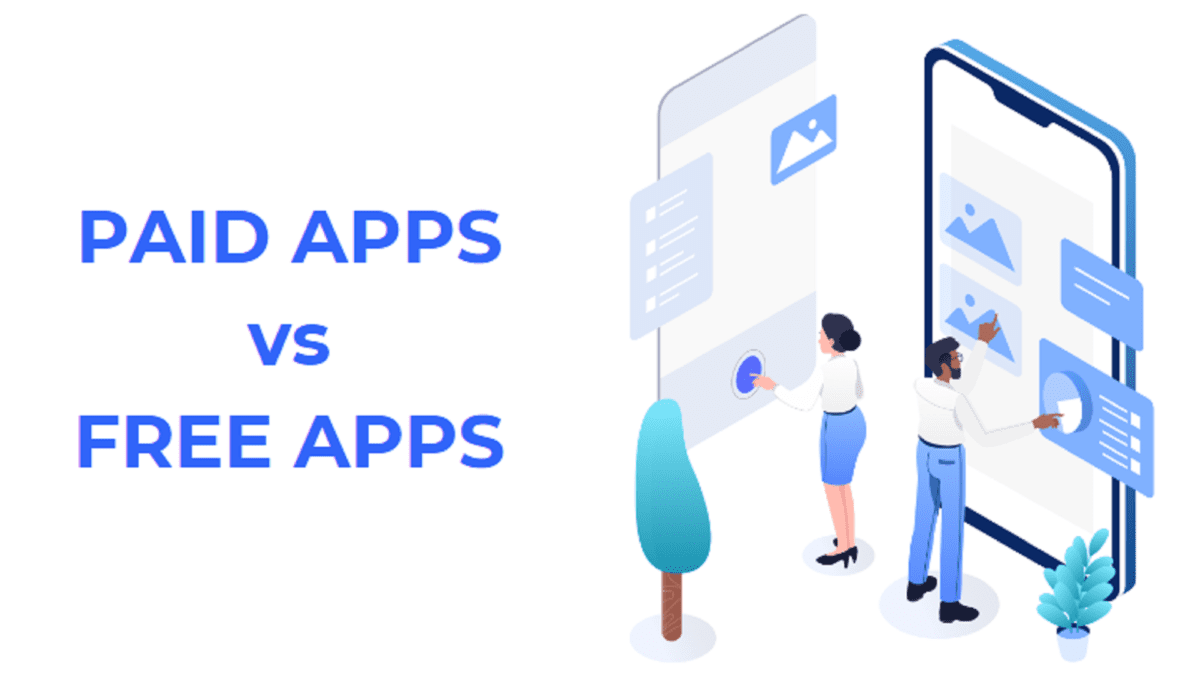
On comparing free apps with paid apps, the numbers we received were ground-shaking. As per Play Store statistics, the number of free apps alone is approximately 2,589,804 as opposed to 1,25,894 paid apps. Whereas, according to the App Store statistics, 90.3% of total apps are free. Similarly, the difference between the number of paid apps downloads vs. free apps downloads is huge and is in favor of the latter.

These stats speak volumes about the preferences of users, globally. Therefore, it is proved that developing a free application is going to fetch you a wider user base.

You might be wondering about “How Do Free Apps Make Money on Android and iOS?” or the question buzzing in your mind right now might be – “Is it even possible to make money from a free app, let alone higher revenue?”

Absolutely!

What you need is a success recipe (in our case, a powerful app monetization strategy) that will provide you detailed insights on prevailing monetization models, enabling free applications to become money-making apps.

Proven Free Mobile App Monetization Strategies

Now that we have witnessed the proliferation of the popularity of free apps, let’s get straight into the strategies that make it possible for these free apps to make money without explicitly earning from users.

Advertising

Being a pretty familiar concept, advertising is one of the most popular and influential ways to earn money from an application. When talking about this trend in the app monetization, you promote services or products for third-party clients on your application and in return, you get paid. There are many parameters on which a company pays for the advertisement –

  1. Per impression
  2. Per click
  3. Per install

The discussion doesn’t end here. There are five variants or ways in which you can display the ad on your app –

  • Banner ad

Banner Ads | Brafton

These are the type of ads that you might have seen at the top or bottom of any app. This placement is considered less intrusive and hardly tampers with the user experience. Although, studies show that these banner ads have a very low CTR; meaning there are fewer chances of any user clicking on that ad. Nevertheless, the fact that banner ad growth in 2017 increased at CAGR 7% is a clear indication of its effectiveness despite everything.

  • Rich Media ads 

What Are Rich Media Ads: The Complete Guide For Publishers

Evident from the heading, rich media alludes to popular mediums of media such as engaging videos induced with dynamic CTAs, Parallax scrolling, other social media components, QR codes, and more.The case with videos is that an advertisement video would start playing when there are any natural pauses in the app (mostly random). Many apps also reward users upon watching the whole video. One case in point is the “Ludo King” app that offers coins for playing a video.

  • Native ad

What Is Native Advertising and How to Use It | LinkedIn Marketing Blog

Native ads are the most artful of all. These ads are so well integrated into the app’s interface, making it hard for the users to recognize them as ads rather than as part of the content of the app. Facebook’s ads appearing as user-generated content is a prime example.

  • Interstitial ad

What are Interstitial Ads & How to Use Them Without Being Penalized

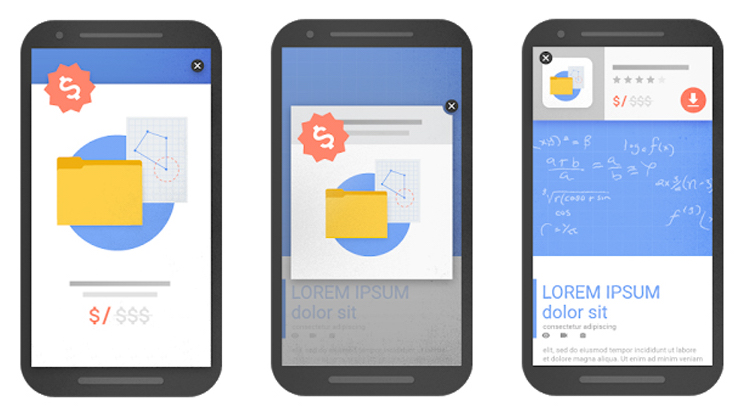
Though might be considered a little too much on-the-face, these ads are a great way to promote third-party services or products. There is a high chance of getting more CTR via this ad type as they cover the whole of the device screen, obtaining the full focus of the users. Users can either choose (X) option placed on the ad or can click on it.

  • Incentivized ad

Top Incentivized Advertising Networks (2020) - Business of Apps

These types of ads include incentives for users in return for performing specific in-app actions such as filling out a survey or poll, sharing content, and so on. It is like killing two birds with one stone, for you not only earn through advertising, but you also get a loyal customer base via giving out incentives. One of the catalysts of this trend is the RunKeeper app.

  • List ads

Being self-explanatory, List ads are displaying multiple ads (advertisers) at a time.

Referral Marketing and Affiliate Income

How to Set Up a Referral Marketing Program For Any Industry (With Industry Examples)

This is a proven free mobile app monetization strategy. Under referral marketing, the content containing information about any affiliated company is shown in the application. Here also, your earnings will depend on the clicks and number of installs done through your app. The rewards earned are based either on the revenue share or the cost per action (CPA) model.

This marketing model is used for –

  1. Promoting other apps via banners or pop-ups,
  2. In-app advertisements
  3. Advertise via in-app store

Similar to the previous advertisement model, campaigns that are used in affiliate marketing are:

  • Cost-per-Mille – Popularly known as CPM, this is where you get payments depending on the number of impressions. The advertiser is charged every 1,000th time the affiliate ad is shown (known as mille in Latin). In comparison to the Android platform, iOS affiliate ads are usually more expensive and sometimes can differ upto 30%. AdMob, operated by Google has the highest end of CPM rates.
  • Cost-per-click (CPC) – The term is self-explanatory pertaining to the revenue generated by the number of clicks on the advertisement.
  • Cost-per-sale – Also called  as PPS (Pay-per-sale), this where a developer is charged when a sale/purchase has taken place. The publisher of the app is paid a fixed commission (a specific percentage of the purchase).
  •  Cost-per-view – With CPV, you are paid on every view on the advertisement video or other rich media ad interactions.
  • Cost-per-install – Under the CPI model, you generate revenue via per install of any software product.

One case in point for affiliate marketing here is Amazon. You can select a product to advertise it in your app and then get the ad fees depending on every redirected purchase.

In-App Purchase & Freemium

In-App Purchase - Apple Developer

Another great strategy to turn your free app into a money-making app is to engrain the in-app purchases model in your application. With this functionality, any user who makes in-app purchases will be given some sort of bonus or premium functionality. You can sell any virtual product under the in-app purchase model including gaming currency, or ability to unlock any stage or purchase any fictitious thing relating to any particular game.

Now, there are three types of in-app purchases-

  • Consumable – It is a product that can be used only once within the application, i.e., Gaming currency.
  • Non-consumable – It refers to any product purchased for long-term and repeated use, i.e., unlocking any gaming level or buying any virtual book, etc.
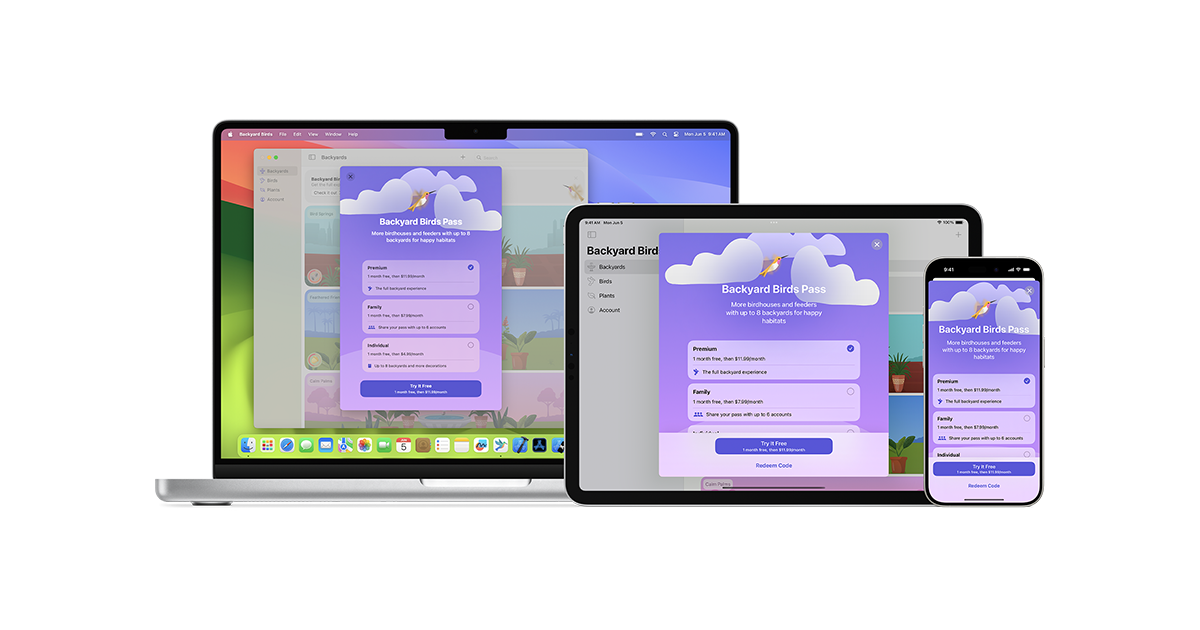
  • Subscription – It’s a model allowing users to access premium features functionalities of a product for a limited time. This is what we are going to discuss next in detail.

Subscription

Subscription models and the IoT - HP Instant Ink · Information Matters

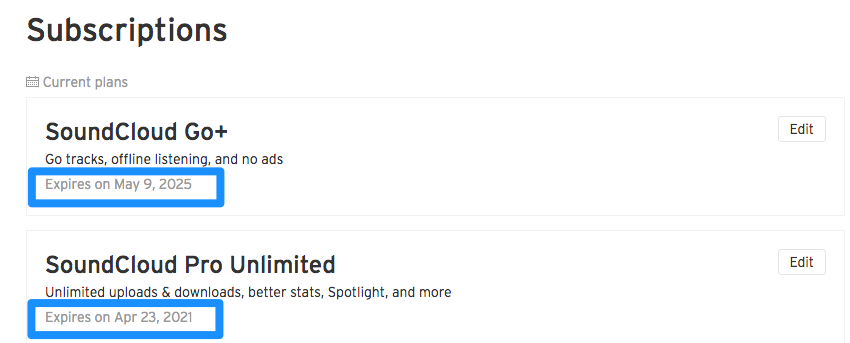
As explained above, this is one of the most in-trend monetization models and a way through which a free app brings profit, mainly employed by online newspapers and magazines, cloud services like Dropbox and SoundCloud, and entertainment apps such as NetflixSpotify, a ride-sharing app like Uber, etc. Though the app is free to download, a user will have to buy a subscription plan to access any kind of feature which the app is mainly famous for.

Netflix - WikipediaSubscriptions, Payments & Billing FAQs – SoundCloud Help Center

In fact, as per the report by Sweet Pricing, 5% of the overall successful apps are using this model. Though, not a money-magnet primarily, it can help you generate big bucks in the long run.

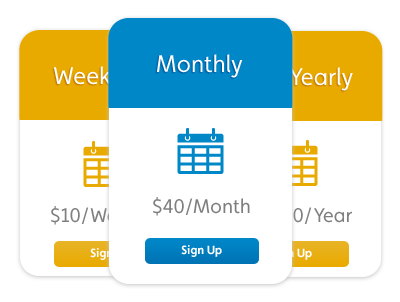
There can be many options under this model –

  1. Monthly-based subscription
  2. Yearly-based subscription
  3. Per-day subscription

Major platforms like Google and Apple allow the app owners to manage subscription transactions through them. Consequently, Apple enjoys 30% of the first year’s overall subscriptions followed by a decrease to 15% after a year of paid service. Whereas, Google is more generous in this regard by taking only 15% of first year’s revenue.

Sponsorship

Sponsorship Management | Definition & Meaning | Optimy Wiki

Being one of the most effective free mobile app monetization techniques, the sponsorship model is ideal for those apps having an existing strong user base and on the top of it, caters to a particular market niche. This way, you can connect with the sponsors belonging to that industry and match their brand with ads, info in the app, or even adapt the design of the app to that particular brand.

There are primarily two kinds of deals – Revenue from the app divided equally or setting a monthly sponsorship fee.

Crowdfunding

The Potential of Crowdfunding for Water P3s | Water Finance & Management

Rather a new cog in the machinery of monetization, Crowdfunding is another way how free applications make money. There are several renowned platforms like CrowdFunder, AppsFunder, Indiegogo, Kickstarter, etc that developers use for generating funds for app like vinted.

In fact, in 2017, 138 app ideas received fundings amounting between $10k-$100k on the Kickstarter platform.

Email Marketing

The email has been a great source of marketing to many organizations since its inception, something that also became a crucial option for every mobile app development company and app marketing team to promote mobile apps.

The process consists of accumulating user data (email address) and then sending them corresponding marketing materials to procure the interest of subscribers in the product.

Certain ways through which you could collect the email addresses are:

  • Asking for the email address in return for rewards (coins, bonus, etc.)
  • Employing third-party tools
  • Encouraging them to sign up via Facebook SDK

Note: Always ask for permission or inform the users before collecting any data along with stating the purpose.

Pay Per Download

How to Earn from Pay Per Download Websites

Under this popular free app monetization model, an app is offered at a one-time fee charged at the time of download, giving access to all its functionalities and features, as opposed to the premium model.

Though this model ties all the profits and revenue to the number of downloads, this might not be the first choice of many app developers. The reason being, users might not feel comfortable paying for the app upfront without even getting a trial.

One way to go around it is to have an impeccable marketing strategy with exceptional app listing, press, and reviews to promote the app’s features and values.

Though, there were the most popular and prominent ways to earn money via free apps, there is one more not-so-avidly-used app monetization model –

Accumulating And Selling Data

Sales Data Analysis | How to Analyze Sales Data | Pipedrive

It might not be the most ethical practice, but there are many apps out in the market that earn profits on their free apps by selling their databases to third-parties. The information traded might be the email addresses, personal preferences, and searches of users, and social media accounts.

If this is something you do not support (which is excellent), you can make use of this raw data to tap into the minds of users and improve your product/services based on their preferences.

How To Choose The Right Free App Monetization Strategy?

Any app monetization strategy is deemed futile which doesn’t compliment your business model. All the efforts will turn to dust if you can’t procure expected results from your endeavors. This makes it prominent for you to find out which strategy would render positive results, something that we have eloquently covered in our article “Choosing the right app monetization strategy”.

Free App Monetization Tools 

Here are some tools that will help you in integrating your application with one of these free app monetization models.

For Freemium App Model

The Ultimate Guide to Freemium Mobile Apps - Sweet Pricing

Play In-app Billing – A powerful tool by Google for every Android app development agency to easily integrate the freemium model into their app. The tool takes care of all the checkout details, negating the need for your app to process financial transactions.

Apple In-App Purchase – This Apple tool enables the users to buy the in-app content/services or subscription and treats it as a software download from the store.

AdWorkMedia – It is a perfect tool to integrate advertising methods with gated freemium tools in a system. It allows you to implement content and product lockers, provides walls and other similar monetization tools.

For In-App Advertisements

Top In-App Advertising Companies (2020) - Business of Apps

Google Admob – This tool from Google helps the users to analyze the data accumulated on the activities and preferences of customers via Google Analytics. This allows users to improve their advertisements, based on the understanding of the analysis.

Apple iAd – This poses as a great tool for users to show ads of other companies while also managing their own advertisements – all in one place.

NativeX (for games) – This tool is developed by Venture beat. It renders incredible no lag video with creative ad units for impeccable game app monetization and user acquisition.Unity (for games) – Only targeting ads for gamers, this tool displays customized ads based on each user’s behavior in the game app.

For In-App Video Advertising

In app Advertisements: What's Trending Today?

Vungle – It is a remarkable tool that has the SDK working on all major platforms, i.e., iOS, Android, and Windows.

Adcolony – It employs its proprietary Instant Play ID technology and buffer-free video playback in order to engage and monetize users.

For M-Commerce Purchase

Shopify Becomes Canada's Top 10 Biggest Public Firms | Restaurant Tech NewsAdrian Gordon - Head - Technology @ MobiCart - Crunchbase Person Profile

Shopify – This tool is excellent for adding e-commerce to the native app that allows customers to buy directly from within the app.

MobiCart’s tool – It effectively allows the application to act as a website, facilitating the buying and selling of products.

App Monetization Mistakes To Avoid

The occurrence of mistakes is probable in the initial stages of any process, which resultantly invites blunders creating great losses. In which case, a pre-insight into these mistakes is helpful in avoiding them completely. So, here they are –

1. Not Analyzing And Targeting A Particular Niche

Niche Marketing: Identify Your Target Segment

Understanding the geographical needs of the users is pivotal. Your app might be preferred by users from one country and not obtain attention at all from others. This is why it is important for you to study the market niche and its feasibility in relation to the location of the targeted user base. So, instead of crying over spilled milk, it is better to analyze your potential users first and then develop a monetization strategy around it.

2. Selecting The Wrong Pricing Model

Choosing the Wrong Pricing Strategy Can Be a Costly Mistake - Knowledge@Wharton

A crucial part of the app monetization strategy is setting up the prices and rather a sensitive one as well. Carelessly or assumingly setting up prices can blow up in your face, obliterating everything you have worked hard for. For instance, $5 may sound fair to you for the US audience, as iOS users’ average spending on mobile apps is $88 per year, but the same pricing would not work for users in developing countries. So, always make sure to study your audiences well before finalizing anything.

3. No Strategy For The Localized Version

5 Smart Ways to Approach Mobile App Localization | Crowdin Blog

Let’s understand this via an example. Say, you are charging 1 USD from users to jump a level in the game in the US. This might be an acceptable amount for US users to pay for in-app purchases but may not appeal to users in other regions where finance is a concern. There are even some regions where the in-app app monetization model might collapse, i.e., Latin America, where users are not in the position to spend as much.

However, you can here choose another monetization strategy i.e., in-app advertisements to bring in revenues.

4. Not Having A Strategy At All

Your Strategy Needs a Strategy

More often than not, Indie developers publish an app just for the sake of it or for fun and give no heed to making the app a lucrative business. Planning an app monetization strategy is something that should be done while the development process is on-going.

Of course, you can mix up all these models and integrate them together into your app in a tasteful and practical manner.

Conclusion

Based on our understanding of this article on “How do free apps make money”, it is evident that in-app advertisements is the easiest and effective app monetization model that can be adopted for free apps along with other kinds of applications.

Whereas, other strategies such as in-app purchases, subscription, and freemium models are those that are suitable for certain types of applications, offering particular functionalities.


A Guide to Using Flutter to Construct a Startup Mobile App

GitHub - flutter/flutter: Flutter makes it easy and fast to build beautiful apps for mobile and beyond.

The open-source Flutter SDK is a Google UI toolkit that creates attractive, natively compiled mobile app, from a single codebase.

With apps being downloaded and used by millions of people in a rapid way,  the mobile app development is skyrocketing.

There are many companies that are making use of this trend and contributing to the increase of app downloads. Here are some facts:

Did you know that android users can choose from 2.7 million apps, making Google Play the biggest app store?

The Apple App Store is the second-largest app store with almost 1.82 million available apps for iOS.

You should know that the accurate number of applications change because both the app stores regularly remove low quality content from their app stores and accept apps from the developers on a daily basis. However, the number of apps has been steadily increasing over the years.

In 2020, global mobile app revenues were over 581 billion U.S. dollars. In 2023, mobile apps are projected to generate more than 935 billion U.S. dollars in revenues via paid downloads and in-app advertising.

After reading the above facts and data,  it is clear that the app development market is rapidly growing, and mostly the startups are taking the lead in developing apps and increasing their reach. If you have an idea and are confused about which platform to use, the best suggestion would be mobile app development with Flutter.

What Makes Flutter a Better Choice for Developing a Startup App?

Google Developers Blog: Flutter: a Portable UI Framework for Mobile, Web, Embedded, and Desktop

As they say, numbers never lie. Let us look at some data revolving around Flutter app development services:

  • According to a 2020 developer survey, Flutter is the second most popular cross-platform mobile framework used by software developers across the globe. According to the survey, 39% of software developers chose Flutter development services for apps. This usage is expected to grow in 2021 as well.
  • Google broke down the share of Flutter developers and maximum work for a startup. Here is all you need to know: 35% work for a startup, 26% are enterprise developers, 19% are self-employed, and 7% work for design agencies.
  • Google reported a 80% spike of Flutter built apps in Play Store after version 1.20 was released. The number of apps built with Flutter in the Play Store has increased from 50,000 to 90,000 since April 2020.
  • As per Google Trends, Flutter is the leading programming language since February 2021 followed by React Native to develop customized cross-platform mobile apps.

Creating a startup mobile app with Flutter is in vogue and why would it not be? Flutter provides mind blowing benefits! Let’s discuss some benefits, shall we?

Benefits Of Building A Mobile App With Flutter

1. Fast development process

How to Speed up the Web Development Process | Codementor

Flutter cross-platform application development is a huge buzz creator due to its “Hot Reloading” or “Hot Restart” features. With the help of this feature developers are able to write codes and finish the project development in real-time. As a result, coders increase their productivity and save a lot of valuable time.

2. Utilization of widgets

App Widgets Overview | Android Developers

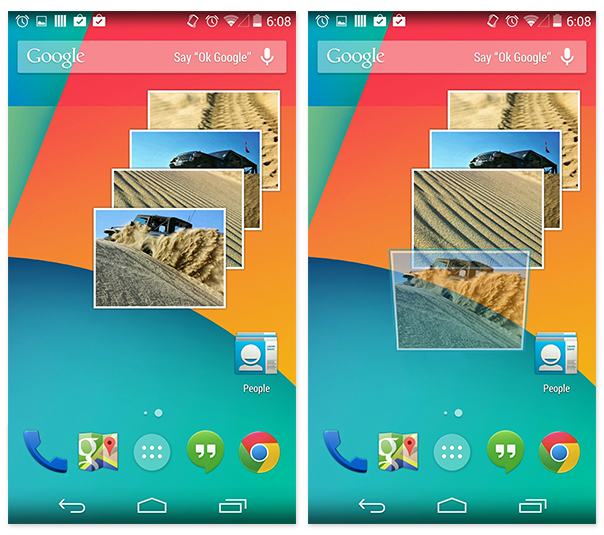
Flutter integrated apps provide a wide range of widgets including navigation, scrolling, fonts, and icons that are customizable regardless of the screen size. These widgets are easy to customize and make the app development process fast and simple.

3. Single code base for multiple platforms

Native App Development: One Codebase. Four Platforms.

The reason why Flutter is trending is because of its ‘write-once’ approach. Writing multiple codes for different platforms is no longer significant. Flutter mobile app developers only have to code once and not separately for both operating systems, that is Android and iOS, that is why Flutter is considered by most of the developers. As a result, Flutter makes the app development process as cost effective as possible.

4. User-friendly interface

user-friendly-interface | The Realtime Report

Flutter can customize almost anything visible on your startup app. Be it shapes, colors, shadows, clipping or transforming elements, Flutter allows developers to execute everything seamlessly. Hence, it is needless to say that Flutter makes the app development process flexible and simple without adding extra workload.

5. Potential to move beyond smartphones

5G points the way to life beyond the smartphone | ZDNet

If you want to create a startup app, why do you want to limit it to just smartphones? Flutter cross platform app framework works as a full-fledged development tool. With Flutter you app can function on any platform- Windows, Android, Linux, IOS etc.

6. Serverless apps

Building Serverless Apps on AWS

Flutter allows the creation of serverless apps. Developers can use Google’s firebase support as back end and create serverless startup apps. Flutter provides a quick development cycle to help developers achieve their targeted time frames.

Numerous companies are choosing Flutter to develop exceptional apps in record time. Due to all the benefits, features, and functions listed above, creating an app using

If startup app development companies choose Flutter, then it’s the correct choice made. Flutter eliminates the struggle of time constraint and limited budget faced by startups trying to release apps across multiple platforms. Also, it is a blend of all the best Google ideas and technologies, a mixture which results in the creation of a powerful mobile framework.

Step By Step Guide To Flutter App Development

Step-1: The idea

Sail in a Moment | IDEA – Antistress & Creativity Booster

This one is a cliché but don’t all great applications begin with an out of the box idea? Once you have an idea, you need to conduct a market research and find out your target audience. If you wish to create an app then don’t just begin blindly; instead, dig deep and research the facts, concepts and competitors. It is always important to find out how you are better than your competitors.

Step-2: Flutter for MVP

Why Flutter is the Best Solution for Building MVPs?

A minimum viable product or MVP acknowledges business owners to validate their idea, gather feedback, and identify customer’s needs. MVP is useful in avoiding market failure and investing on a product that is not backed up by proper market surveys and research.

Being an open source, Flutter complements MVP development. With Flutter increasing the pace of the development process, the process has become more simplified and efficient. Also, Flutter’s compatibility with Firebase, doesn’t require you to separate backends for building simple MVP. Creating MVP with flutter provides an added benefit of delivery of an intricately designed solution.

Step-3: User interface and user experience

Evatronix - Graphical User Interface design

Flutter not only provides us with native performance and hot reload for fast development but also access to beautiful, native components. The Flutter toolkit has opened a gateway to allow for a multitude of UI/UX and, by using its own source code, eliminating platform limitations.

Flutter is becoming an all-platform framework. What about when you want to use your startup app or a smaller or a bigger device? Be it a smartwatch, TV, laptop or smartphone. So, you can build native mobile apps using flutter to provide a wider range of devices that the app can function on.

Flutter’s adaptive components help you overcome such challenges. Adaptive layouts means how your app proficiently displays the UI on the device where it is being viewed on.

There is no need to build separate code for a multitude of devices, as Flutter already supports that using a single code-base. There are packages you can rely on which are equipped with native iOS & Android widgets to help your app give a platform-specific look.

Step-4: Development, integration and deployment

Practical continuous deployment: a guide to automated software delivery

Startup mobile app development is a highly interactive process. The process includes- planning, development, coding, testing and reviewing. This is the step where you must look out for a Flutter mobile app company that can develop an android app using Flutter.

Mobile app development comprises three integral parts that are – backend, API and mobile app front end.

  • Backend: The Backend has the information that the end user cannot see. It includes databases and server-side objects that are important for supporting mobile app functions.
  • API: Application Programming Interface is a communication method between the app and the backend.
  • Front end: The front end of an application is what the user uses. Mostly an app has an interactive UX that uses APIs and backends in order to manage the data.

Once everything is in place, the next step is deploying your web server (API) into a production environment that is scalable. The second is deploying the app on Google Play Store and Apple App Store.

The Bottom Line

Financial Analysis: Analyzing the Bottom Line with Excel

The current app development market is extremely competitive! In order to make a new app stand out within a limited budget, the product should be extraordinary enough to drive the attention of the crowd.

If you are launching your startup app, Flutter is the platform to choose as it allows you to develop user-friendly apps across multiple platforms in a cost-effective way. Unlike other platforms, Flutter app developers create apps with a smooth UI for their users.

Flutter is bound to transform the cross-platform app development industry with its capabilities to emboss customization and expedite the app development process. Dive deep into the world of Flutter app development company and join the transformation.

Must-Avoid Post-Launch App Mistakes

Everything You Need to Know to Correctly Launch Your App - BuildFire

Mitigating the risks of mobile app launch mistakes during the pre-launch opportunities provides the opportunity for an effective and user friendly app.

The dynamics of the mobile app industry revolve around unpredictability due to the changing trend wave and market requirements. It is hard to single-handedly pinpoint a universal reason leading to app demises as each failure offers new learning. Yet, one aspect that analysts of the old and new order mutually agree upon as a cornerstone for app success is post-launch marketing.

Having fought our way through grim times to emerge as a global mobile app developer cohort, Anteelo knows the importance of investing in post-launch mobile app marketing. We’ll dispel some of that wisdom today as we discuss the recurring theme of post-launch mistakes and how to avoid them.

Mobile App Launch Blunders To Avoid 

The following stages often prove a damp ground to tread on when it comes to post-launch mobile app marketing.

Problem Statement #1 – Planning or the lack of it

Must-Avoid Post-Launch App Mistakes

Market leaders visualize and anticipate business scenarios and layout measures to resort to in case things go downhill. Yet there are those who consider publishing their app on the app stores, the end of a project. A cross-industrial study estimated that up to 70 – 80% of new product introductions fail. There is no room for complacency.

Solution –  Create a roadmap with probable business cases and perform thought experiments to mitigate 11th-hour developments. Delegate individual responsibilities to mitigate last-moment confusion.

Problem Statement #2 – An unknown neglect towards marketing

9 Retail Marketing Strategies to Help You Get New Customers — and Keep Existing Ones - Vend Retail Blog

Often DevOps leaders and IT practitioners have a partisan view towards developing the perfect product. Whereas that is a debatable stance on its own, they collectively disregard the need to pump cash and raise fanfare after a successful app launch. Being a 600-strong mobile application development company, our in-house experts know better.

Solution –  Divide marketing budgets into pre and post-mobile app launch marketing actionable. The former should cover preliminary collaterals such as secondary research, defining budgets and marketing goals to partnering with influencers. Similarly, the post mobile app launch strategy should cover your social media plans, referral & retargeting campaigns as well as up ticking user engagement.

Problem Statement #3 – Setting overly ambitious goals

Why more ambitious goals are more likely to help

Only fools set a deadline first and begin operations later. Overestimating the delivery of the final product could be self-inflicting in terms of everlasting reputational damage. There is an art to building hype and while at it you must take into consideration a buffer for delays so that the post launch mobile app strategy could be adjusted accordingly.

Solution – Maintain a balance between disclosing the final product launch date and sustaining user-end hype. Tease the audience with doctored leaks if you can and take early feedback. Smartphone manufacturers are a case in point. You never know their launch date until the actual event is within 2 months of the schedule.

Problem Statement #4 – Lack of user data

JavaScript trackers stealing user data through Facebook Login

Instead of leading mobile app development solutions from the front, you’d be sucked into a black hole of failures if you do not know your audience inside out. How can you fabricate the product without knowing audience demographics, their behavioral patterns, engagement enablers, and spending habits? If not, take a page out of the following self-help advice.

Solution – If such in-depth data isn’t available readily, then partner with data vendors or social media platforms to acquire the same. Such structured data would help you extrapolate insights that eventually lead to lasting success of the app.

Problem Statement #5 – App store optimization (What’s that?)

App Store Optimization — Part I: What and Why ASO ? | by SHISHIR | PROGRAMMING LITE | Medium

App Store Optimization is the practice of refining the app as per guidelines laid out by app publishing platforms. ASO helps an app directly feature in user searches and increases the likelihood of downloads. With an excess of 2 million apps each on the Google Play Store and Apple Store respectively, ASO is unavoidable and the ones who avoid it live to regret their decisions more often than not.

Solution – Focus on optimizing the details such as the app name, title, keywords used in the description, preheaders, and monitoring customer feedback to maintain a healthy rating. This would lead to frequent features in query searches and as a result, more downloads.

Problem Statement #6 – Confusing product messaging

Must-Avoid Post-Launch App Mistakes

If your brand label does not help consumers identify you with your line of business then you have a problem up your sleeves. As a mobile app development company, we’ve come so far that we appreciate the significance of concise messaging. Mincing your words could cost millions in turnover, literally.

Solution – We strongly recommend conducting surveys and periodic questionnaires to determine user expectations. Not only will this help you choose the right style guide for design but also the content-triggers that encourage a purchase order.

Problem Statement #7 – Absence of feedback capture mechanisms

Why Giving Feedback Matters to Your Employees | Lucidchart Blog

A rather depressing statistic suggests that about 80-90% of the applications in the app store are shunned after a single-use. Functionality could share a large portion of the blame, but so does the fact that the app developers refuse to listen to their customers and capture feedback.

Solution – App store comments are full of heartfelt feelings (and expletives in case the app sucks) coming straight from the users. As you scale the product the need to engender applicable, expected, and on-demand functionalities grow. Developers should readily capture feedback be it through ratings, comments, or other supported media.

Problem Statement #8 – Relying on outdated software

Outdated IT systems and how to manage them

Technologies keep upgrading and therefore warrant an updated architecture for smartphone applications. Android and iOS release yearly updates for smartphones, but it gets complicated when a particular smartphone manufacturer alters the stock version of the OS to offer something afresh. All these intricacies make the process of keeping apps updated in terms of software specifications.

Solution – A custom mobile app development company like ours recommends sharing newer versions of the app periodically than sporadically. The frequency should allow users to acquaint themselves with a particular set of features and only then look forward to changing.

Problem Statement #9 – Not leveraging discovery platforms

The proportion of zombie apps has grown with the industry size. This informal category is a place you don’t want to be because these are the apps whose total traffic is tantamount to nothing or something embarrassingly insignificant. Provided you’ve done ASO well, and the app is strong technically, one reason why you could be still lagging is not channeling traffic through app Discovery Platforms.

Solution – Such platforms help drive meaningful traffic to your app through targeted marketing to their user base. Platforms such as PreApps and AppGratis would be a couple of examples. The investment is feasible as the chances of lead generation and conversion skyrocket by a multifold.

Problem Statement #10 – Not factoring in MVP

Snapchat – the fastest way to share a moment!

Minimum Viable Products give app entrepreneurs an outlet to test their thesis on product acceptance. Following the success of apps like Uber, Airbnb, & Snapchat, MVPs became a cross-industrial rage for even offline products. Yet, there is a cohort that often glosses over this pre-market testing and validation phase. Mobile app development services like ours, know for a fact that collecting such pre-launch feedback could be paramount to future success.

Solution – Whether developing an app in-house or partnering with mobile app development services in the USA, it is recommended you establish and maintain a close-knit network of beta users to try out the product and provide feedback as and when needed. This should be disparate from internal employees for the feedback to be considered non-partisan.

Problem Statement #11 – Ill-priced monetization models

8 Mobile App Monetization Models and Strategies | RubyGarage Blog

Making money from your app is an art not everybody excels at. If you have a minute, do check out this guide on how to monetize your app. Adopting a model that makes no sense in a desperate bid to out-compete your peers could be fatal. On the flip side, no gospel reprimands you for testing out newer approaches and payment schemes.

Solution – For the time being, you can choose from a bevy of pricing models such as freemium, premium, data sourcing, advertisements, and sponsorships. But who is to say if you turn out to be the ingenuine wizard who comes up with a never-before-seen subscription model that takes the industry by storm.

Recommended Mobile App Launch Checklists

Alright, so we’ve been through the common ideological traps that app developers tend to fall into and take misfire aim towards glory. But what is the course-correction roadmap that one should have in mind when it comes to creating a mobile app launch checklist? Well, there are different guidelines to be followed for Android and iOS. Inculcating the following steps into your app launch plan would ease the transition from pre-market to post-launch.

Android app launch checklist

Must-Avoid Post-Launch App Mistakes

Keep in mind the following steps while publishing apps on the Android Play Store:

  • Take note of developer program policies
  • Create your developer account
  • Prioritize localization
  • Release and promote your app on multiple platforms at once
  • Carry out quality analysis for cross-compatibility across devices
  • Stay within the technological distance of recent API releases
  • Engineer your Android App Bundle
  • Strategize around Play Store Listings
  • Promote your app with pre-registration
  • Upload and test the Android App Bundle on Open/closed test tracks
  • Analyze pre-launch test reports
  • Define your app’s pricing and geographies of distribution
  • Pick applicable distribution options
  • Establish in-app products and subscriptions
  • Set your app’s content rating for relevant age groups
  • Run the leftover checks and publish the app
  • Begin promotions
  • Never leave incoming feedback such as play store ratings/comments unattended
  • Stabilize the app with further uptime quality checks
  • Your android app has been launched. Good job!

iOS app launch checklist

We’ve briefly summarized the iOS launch checklist for mobile apps so you could publish your app on the iOS app store:

  • Create app distribution certificate and profile
  • Then create your app store connect account
  • Archive your application
  • Upload the app with Xcode
  • Configure app-metadata with the App Store Connect record you just created
  • Submit the application so it can be reviewed by content moderators
  • After some time, check for the status of your app
  • If everything is fine, your app will be approved and published successfully

Final Thoughts 

In the better part of the last decade, Anteelo has forthrightly staked its claim as a full circle mobile app development company. Some of our most impressive work has emerged from partnerships representing iconic brands such as Domino’s Pizza. But with all humility, we say this, the best is yet to come. You can count on us for pretty much anything mobile apps and not just post-app launch correctional measures.

Working with SQL Server Azure: Read and Know

As a new version of SQL Server is under preview these days i.e. 2016 Preview and soon will be out for use. It might be possible that you would be wondering why SQL Server @Azure and how it’s different than traditional on-premises Server.

Those who have already gone through the process of purchase, downloading, and installation can understand the pain caused by it.

So here it is with

–          No license purchasing

–          No worry about new release

–          No long hours of installation

–          No need of latest compatible operating system

–          No worry about disaster recovery

–          No worry about availability and scalability

And the list goes on…..

Visit Azure portal get an account, create your server in the blink of eyes and start digging into it.

Let’s create a SQL Database @Azure…

  1. Login to Azure portal [if don’t have a subscription please get one, don’t worry its free for one month which is good enough to enjoy the benefits of cloud and make an informed decision]
  2. Create a Database and a Server for it
  • New > Data Services > SQL Database > Quick Create
  • Provide a name for Database
  • Choose a Server [if it’s your first DB then select “New SQL database server” else choose one from the drop down list]
  • So if you choose to create a new database server you will get some more cool options to choose from such as
    • Provide the Region [yeah these are the location which Microsoft has got its data centers]
    • Login Name for server
    • Password for Login
    • Click on “Create SQL Database”

Hey look it’s there under “SQL Databases” option on the left menu

  Get your connection string

  • Select Database from Database List
  • Click on “Dashboard”
  • Click on “Show Connection String”

4.       Start consuming it from you application using any of technology you love

Android or iOS: Mobile Platform App For Startups in 2021

Which Mobile Platform Should Startups Choose in 2021: Android Or iOS? - You Startups

Back in 2008, the iOS App Store was launched with 500 apps. Today that number has skyrocketed to 1.85 million apps that are available for users to download. Android users have a bigger app universe to browse from that consists of over 2.56 million apps available in the Google Play Store. It is safe to say that we are living in the digital era! To prove we are in the digital era, let’s recall the numbers. Did you know that the number of smartphone users worldwide surpasses 3.5 billion? As per the Statista- Smartphone User forecast, it is estimated to further grow by several hundred million in the next few years. There are 7.94 billion devices connected worldwide and this number is more than the number of people in the globe! Hence, there is no denying the fact that mobile applications are an integral part of our daily lives. Keeping the above data in mind, many entrepreneurs are planning to start a mobile app centered business. If you are amongst those businessmen who are looking forward to creating a mobile app, then the first question to address is – which is better among Android vs iOS development?In this article   you will walk through certain factors that will influence your choice, and embibe you with the iOS and Android App Development Platform.

Let’s get right to it.

Apple vs Android: Market Share

Innovative Mobile App Ideas for Successful Startups in 2020 [Updated for 2021]

According to Statista, in 2020 the market share of Android and iOS was 86.6% and 13.4% respectively and these numbers are expected to reach 87.1% for Android and 12.9% for iOS in 2023.


Looking into the above graph, you can conclude that Android is a clear winner in the mobile operating system market share worldwide and is expected to remain so in the years to come. It is so because the Android startup apps are the most adopted ones for almost every smartphone vendor other than Apple.

Also, Android is an open source platform that allows and makes it easy for mobile phone manufacturers to add their own look to the operating system.

Apple vs Android: App Downloads

According to Statista Market Forecast 2016–2021, there will be 196 billion annual downloads from Google Play store by 2021, all thanks to growing smartphone and app adoption worldwide.

While from the iOS store there will be 42 billion downloads. Android again wins when it comes to app downloads worldwide and it is expected to enormously grow in the years to come.


After reading all the above facts and data  it is highly advisable for you to  make yourself familiar with the process of startup app development.

We have curated a complete guide on apps for startups, with A to Z information about the process of getting your idea live on a mobile application. In this article, we will answer all the questions that every entrepreneur who is new to the app industry might have.

Which Is Better – iOS Or Android?

Android vs iOS development is a never ending debate between software developers. The quest to- Which platform should startups choose has no one word answer. There are solutions that depend on various factors that an entrepreneur should consider before making a decision.

Let’s go through all the factors one by one:

1. Demographics

There is no denying the fact that Android smartphones have a larger demographic than apple users.

Also, there is no denying the fact that Apple is considered a high end device in which users are willing to purchase apps. So, Apple users are generally found in prosperous parts of the world.

For example: The USA is considered among the highest revenue making countries, thus you will find a larger number of iOS users there.

As per the reports by Statista, currently there are more than 113 million iPhone users in the United States, accounting for about 47 percent of all smartphone users in the United States. So if you are targeting the western demographic, I suggest you to hire iphone app developers.


2. Fragmentation

In simple words, fragmentation refers to when users are running different versions of a mobile operating system and using different mobile hardware models or mobile devices.

We are aware that iOS devices and their release cycles are controlled by Apple alone. As a result, once a year Apple synchronizes iOS version releases with device releases. Hence, fragmentation issues are less.

However, when we talk about Android, fragmentation issues occur constantly, further making life of the android application developers difficult at the time of testing and quality control. Thus, Android fragmentation increases development cost and maintenance time.

3. Design and development

In terms of designing, Google Material Design has a greater influence on UI and UX. Mobile app developers feel that when it is about coding mobile apps then Swift is a much easier language to start as compared to Java.

However, design and development is one factor that depends less on the platform and more on the skills of your partnered mobile app development company. When you are linked with a brand that has it specialization in the development of both Apple and Android apps, it is of the least matter about which platform requires less developmental efforts as both are done within equal efforts.

Now that we are aware of the factors involved, let us discuss the reasons to go for android startup apps and iphone startup apps separately.

Why Choose Android Startup Apps?

A pop of color and more: updates to Android's brand

You should go with Android first if your audience is not concentrated on any one specific demographic or target audience. Also, if there are a good number of customization elements in your mobile app, go with Android.

Below are the advantages of using Android.

1. Greater user base

Majority of users globally use Android devices as compared to other devices, which gives you a large pool of potential users. Not having an android app for business means losing limitless opportunities and audiences for your product or services.

2. Open source platform

Android is an open-source platform which means Google doesn’t charge any fee for using this platform. Wherein, Google also provides Android app development tools and technology for free to the developers. Thus Android app cost is comparatively lesser than iOS app cost.

So, it is a cost-effective solution for your startup budget.

Hardware device manufacturers such as Samsung, Oppo, Xiaomi, etc., all use Android as their default OS.

3. Customizable apps

Android app development allows the app developers to customize the applications as per the business requirement. This means your business app development will get done with the right requirements and required flexibility which might not have been possible with any other platform. It is always a good idea to hire an android app development company that can help you with your startup app.

4. High ROI

The moment you publish your app on the store, you get a big pool of potential users that you can tap into. Since you have such a wide market to target, the return of investment on your android app would be instant and always on a higher end considering your Android app development cost.

5. Compatibility

One of the biggest advantages of choosing an android app over iOS is that there’s no restriction on devices that is to be used for building an android app. You can build an app on any device, be it Windows desktop, Mac, or the Linux system.

The fact that makes Android a go-to platform for all the sectors with interoperability needs is that it allows you to expand your brand across devices and systems .

We now understand the advantages of choosing android apps. Let’s dig deep and see what are the reasons to go for iOS app development for your startup.

Reasons To Choose iPhone Apps

You should place your startup’s first mobile app on iOS by investing in a sound reputed iOS app development company if you wish to come in the sight of the app store’s target demographics.

Let us discuss the advantages of choosing iOS apps for startups:

1. Security

Security is the utmost requirement for any business because sensitive enterprise data is lodged in apps. Android apps are a big risk when it comes to security while iPhone users are cushioned against hacking and malware. When you compare the iPhone vs Android on the basis of security, iPhone apps protect firmware and software through stringent security measures such as :

  • Integrated data handling systems
  • Measures to prevent duplication of data
  • Measures for loss of security by data encryption


2. Revenue

The ones that have a greater ROI than Android apps are the iPhone apps.. The best revenue generation opportunities that you can get from your iOS application development process, is to keep an eye on the mistakes, tips and tricks, and other related information would be a big advantage. You can look for iOS app development services that can help you with your vision.

3. Established customer base

The biggest USP of Apple is its established customer base. Apple is a pioneer in technology and applications. Apple has a well-established niche of its customer base that swear by Apple’s quality and performance and are loyal to the brand. That’s why it is said that once a smartphone user experiences the iOS platform, they will never be satisfied by any other OS and will stick to Apple. 

4. Low fragmentation and testing

As discussed earlier, Apple generally develops just one updation on its existing OS every year. Also, the number of Apple devices are lesser than Android-based ones. Thus, Android apps should be tested comprehensively to get its better functioning on all the versions of Android OS.

On the other hand, iPhone apps just have to meet testing criteria of its previous iOS versions. This constantly reduces testing time and guarantees a rapid time to market for its apps. This also results in saving apple app development cost.

Wrapping Up

After reading the write up you must have understood that there is no right or wrong answer, it all depends on your requirements. We have seen specific scenarios favouring the iOS platform and others suggesting us to go for Android.

By keeping all the above information in mind, you can contact a mobile app development company that will help you build your app without worrying about the operating system.


Businesses develop their next iOS apps using Swift 5- Reasons

Why should Businesses develop their next iOS app using Swift 5 | infotech.report

Swift is a highly intuitive programming language for Apple’s operating systems like iOS, macOS, and watchOS. The programming language has been growing in popularity and it can be attributed to its unique and valuable features. Swift is a widely used language for iOS app development globally. The iPhone app development platform has evolved considerably in the past. After going through four massive version updates, Swift released the latest two versions, Swift 5.0 and Swift 5.1. The remarkable functions of both these versions play a significant role in strengthening the language. The programming language is poised to become a game-changer in the mobile app development industry, with its latest version, Swift 5.

Whether you want to grow your business as an entrepreneur or looking for ways to scale as a startup, Swift offers you all the advantages of developing the best in class, highly functional and completely customised iOS applications. That’s one of the reasons why LinkedIn, Lyft and others have upgraded their iOS mobile application in Swift.

Let us first look into what both these versions have to offer. Then, we’ll look into Swift 5 features that make the updates an ideal choice for iOS app development companies.

What was introduced with Swift 5 Update?

Apart from the revolutionary ABI stability, the Swift runtime is also now added in the present and future Apple platform’s OS versions: iOS, macOS, watchOS, and tvOS.

Swift 5 features also come with a plethora of new capabilities that act as the building blocks of Apple’s vision and give a new direction to the advantages of the swift programming language.

*For in-depth insights, head on to Swift 5 release notes.

Language Updates

1. Binary Compatibility and a Stable ABI

Shipping Binary Frameworks With Swift 5.0 | Square Corner Blog

ABI was declared stable for Swift 5 app development. As a result, Swift libraries have been incorporated in every iOS, tvOS, watchOS, and macOS, which was earlier a problematic element whenever engineers had to develop apps for iOS. The applications will now be easier to develop and much smaller in size since they will not include any libraries.

2. Standard Library Updates

On the future of Windows 10's feature releases | Computerworld

Swift 5’s standard library comes with the following new feature set:

  1. The string has been reimplemented with the UTF-8 encoding which results in faster code.
  2. Better support for raw texts in the string literals.
  3. The SIMD vector and Result types have been added.
  4. Performance improvements in Set and Directory.
  5. Enhancements in String implementation, giving flexibility for constructing text from data.

3. Additional Compiler and Language Updates

Swift mobile development facilitates exclusive access to the memory, both for debugging and releasing builds. It supports dynamically callable types which help in improving interoperability with dynamic languages like JavaScript, Python, and Ruby.

It also implements these language proposals:

  1. Handling future enum cases
  2. Literal initialization through coercion
  3. Introduce user-defined dynamic “callable” types
  4. Supports ‘less than’ operator in the compilation conditions
  5. Identity key path
  6. Flatten nested optionals emerging from ‘try?’

4. Package Manager Updates

Bro Package Manager - Icon Clipart (#5076022) - PikPng

The Swift Package Manager comes with a series of new features in the Swift 5 app development version, which includes: Dependency mirroring, customized deployment targets, target-specific build settings, and the capability to generate the code coverage data. In addition to this, the swift run command includes a capability to import libraries in REPL with building an executable.

Swift 5 also implements these Package Manager proposals from Swift evolution process:

  1. Dependency Mirroring
  2. Platform deployment settings
  3. Target specific build settings

What was introduced with Swift 5.1? 

Swift 5.1 grows on the strength of Swift 5 with features like module stability and other new features that extend the ability of language and standard library like: opaque result types, property wrappers, new APIs for String, diffing for appropriate collection types, etc.

Together, Swift 5.1 makes it easy to design APIs and lower the common boilerplate code.

Here are the features that Swift 5.1 comes with:

1. Module Stability

Family house clipart 7 » Clipart Station

Swift 5.1 makes it possible to create binary frameworks which can be shared with others who leverage language’s added support for module stability. This, in turn, makes it extremely convenient and speedy for developers to develop apps for iOS.

It defines a new text based module interface file which describes the binary framework API, enabling it to get compiled with codes with the help of different compiler versions.

2. Standard Library Updates

C Standard Library PNG Images, C Standard Library Clipart Free Download

The Swift 5.1 standard library comes with the following new features, making it extremely easy to understand how to make apps with Swift 5:

  1. Support for updating and handling diffs on the collection of appropriate types.
  2. Greater flexibility for initialization of an array.
  3. APIs for working with Strings – developing and handling contiguous strings, helper for working with Unicode text, and general initializers for Range and String.index.
  4. Identifiable protocol for extending reductions, vector swizzles, and vectors.

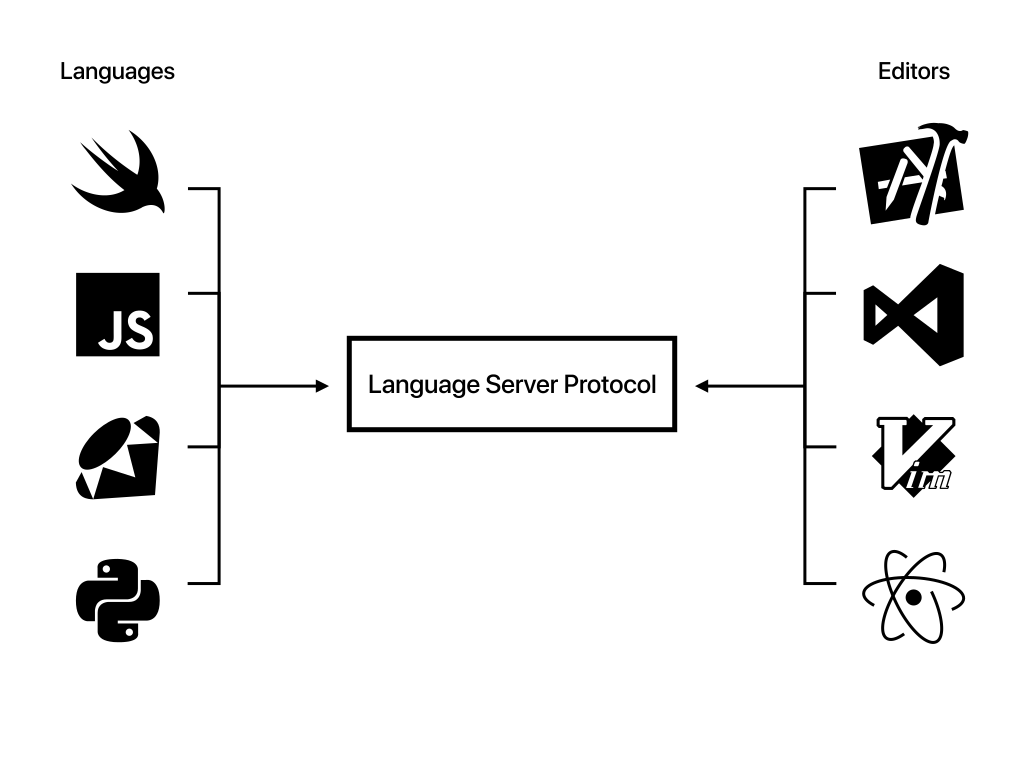
3. Language Server Protocol

Language Server Protocol - NSHipster

The Swift 5.1 OSS toolchain packages for Ubuntu and macOS include binaries for the SourceKit-LSP, which is an implementation of LSP for C-based languages and Swift.

4. SwiftSyntax Updates

What's new in Swift 5.0 – Hacking with Swift

It has been re-architecture with a separate focus on improving the performance by using a parser from the Swift compiler. Additionally, the performance of the syntax tree visitation and its related operations have been improved through the re-architecture of internal data structures.

5. Additional Language and Compiler Updates

Android Developers Blog: New language features and more in Kotlin 1.4

Swift 5.1 comes with these new language features:

  1. Property wrappers introducing consistent context for defining the custom access patterns for property values like – delayed initializers, thread-specific storage, atomic operations, etc.
  2. The return keyword is not needed for single expression getters or functions.
  3. Self can be used for value types and classes.
  4. The compiler synthesizes default values for the properties with default initializers.

How do Businesses benefit from it? 

Although the majority of the features introduced with Swift 5 and Swift 5.1 are in favor of Swift app builders, some of them can be translated into business benefits as well.

One of the key features that directly impact businesses – the one that the Apple industry had been waiting for since Swift 1.0 – is ABI (Application Binary Interface) stability.

Hacking with Swift Live 2019

While sounding much like a developer’s problem, what this means in practicality is that Apple couldn’t include Swift programming language support in the operating systems, because an app written in Swift 2 couldn’t run with Swift 3. Simply because it wouldn’t work with the language support binaries of Swift 3.

The solution that was available to the developers was to include the Swift libraries in the app bundle which would get downloaded from the App store. This, in turn, increased the size and the storage requirement of the application. And became one of the biggest disadvantages of the swift iOS programming language.

But with Swift 5 making ABI stable, the industry has now received a permanent solution to these user-side issues. It would enable the developers to run the application in all the upcoming Swift versions. Meaning, the code is written in the Swift 5 app development process will run on Swift 6, 7, and so on, an event that makes Swift a preferred language for Enterprises and Startups.

This move is speculated to be the one that would bring language several strides ahead in the Swift vs Objective-C comparison.

Here are the business benefits of the Swift 5 update:

  • Smaller app size: Swift 5 makes the language binary compatible. Meaning, the end result of Swift mobile development would be significantly smaller for the users to run on their new operating system – iOS 12.2, watchOS 5.2, macOS 10.14.4, and tvOS 12.2.
  • Faster Launch: Another advantage of this is the faster launch time, since every dynamic library which is used by an application (which increases the launch time) will be cached in the memory and shared among the applications.
  • Greater Performance: Users do not want to work in a broken application. And with app freeze and glitches being the biggest reason behind app uninstallation rate, it is imperative for a business to avoid it. The Swift 5’s ABI stability helps apps in behaving better and offering enhanced performance.

But.

How small is too small? Let’s answer through the help of some live cases of Swift app development for iOS –

  • Apollo for Reddit: comes with an app size of 35.7 MB. Here, the 7.5 MB is made up of Swift libraries. Now when the app gets updated to Swift 5, the size will be reduced by over 20% and come around at 30 MB.
  • Chirp an app that brought Twitter to Apple Watch comes with a size of 28.8 MB, which is inclusive of 11.6 MB made of Swift libraries. This, when updated to Swift 5, gets reduced by over 30%, bringing the size down 20 MB.
  • Readability: One of the key reasons why it is best to choose Swift is due to its readability. It is relatively easy to modify, read and write and the clean syntax renders it a special uniqueness. It requires a lesser number of lines of code than Objective-C when compared to Swift apps.

Apps created with Swift not only decrease the development cost but also the development time.

In a blog post talking about the future of Swift language, Donny Wals said, “Now that we have Module Stability and ABI Stability in Swift, the language is likely to change at a slower rate than we’re used to. We should see less radical, source-breaking changes and the language should slowly mature into a beautiful, fast and stable language that will be a great basis for your applications for years to come.”

Is it good to build an app in swift 5? Yes. The time is right for businesses with iOS apps to get the code re-written in Swift 5 and for new businesses to build apps on Swift 5 and benefit from the impeccable user experience.

MeWe App Development and Determining Its Cost

How To Determine The Cost of MeWe App Development?

When it comes to social media networks, Facebook is certainly one of the most popular choices available. However, a lot of people who care about their privacy have been looking for an alternate, and that’s where MeWe comes into play.MeWe’s CEO, Mark Weinstein, in his Wall Street Journal op-ed, wrote, “MeWe is a full-featured social network engineered with privacy-by-design that’s freemium-based with no ads, targeting or news feed manipulation. Marketers and election meddlers cannot target or boost anything to anyone. These are significant competitive differentiations.” Weinstein also adds that, “It’s gratifying to see MeWe flourishing worldwide. MeWe is the uplifting social network with the features people love, and the respect, control and data privacy we all deserve.”

Technology is taking social media by storm, let’s see the most buzzing social platform that is taking the internet and individuals into a completely new and safe arena.

What is MeWe?

MeWe - Apps on Google Play

MeWe is a social media network based on a subscription model that focuses on privacy. The MeWe site terms itself as a ‘Next-Gen Social Network’ by providing users an ad free experience.

It has become extremely popular as a business-focused product that takes enterprise networking and communication to a completely new level.

The application is found by Mark Weinstein, an entrepreneur who considered himself as one of the early developers of the concept of social media. As of now, the MeWe platform has millions of users and is thriving as a popular privacy-focused alternative to Facebook.

Earlier, Weinstein launched a company named Ello, and based on the challenges he faced during that time, he learned several lessons that allowed him to shatter the social media dominance of Facebook.

Although the platform is free to use for personal users with several features like 8 gigabytes of storage, customized stickers, voice and video support, and newsfeed, enterprises are required to pay $1.99 per month to access additional features.

Why There is a Need for MeWe App Development? 

It’s a no-brainer that Facebook is the most dynamic and popular social media network that has dominated the social cult ever since its initial launch. From job postings to community management, it includes a myriad of features that keep a user hooked and engaged to the app.

However as they made changes in their privacy policy, a lot of people started realizing that their privacy is being compromised by the platform.

According to their most recent update, Facebook has employed an algorithm that observes your behavioral patterns and deciphers them to serve you manipulated content in the application. This makes it more of a target-based platform that displays content as per your past preferences and choices.

In the wake of WhatsApp and Facebook data breach controversy, people are looking out for new social media platforms that are safe and secure. MeWe, a US based social network has come to the rescue and becomes the top downloaded social app in the Play store. MeWe app for android and MeWe app for iPhone has led to the increase of new users in the apps counting to more than 2.5 million users.

With the help of MeWe app development, you can keep your privacy protected by preventing targeting, ads, and political biases.

Essential Features in MeWe App Development 

Mobile App Development Company | Python Mobile App Development Experts

If you take a look at several social media networks available, you will notice that there are certain common features that each of them share. To be able to determine the cost of MeWe app development, you need to consider keeping these essential features in mind.

Moreover, as you introduce other specific features to your application, you will notice that the MeWe app cost will definitely bump further. With that said let’s take a look at some fundamental features required while developing the MeWe app:

What do you get with MeWe?

  • Profile creation 

Your application needs to provide users the ability to express themselves through their personal profiles. It includes allowing them to enter their personal details such as name, address, website, email, birth date, and even mobile number. 

  • Authorization 

A proper authorization mechanism acts as the foundation block of the privacy and data of your users. Therefore it’s certainly a must-have feature in your MeWe application. It involves letting users signup and login in to your platform through their phone numbers or email addresses. Additionally, it also requires a password recovery and reset mechanism, some security interventions, and several other features. 

  • Messaging 

As you’re trying to make MeWe social media platform you surely need to ensure that your users have a proper communication channel. Moreover, in addition to simply sending texts, you may also need to add the ability to send media files such as messages, videos, and stickers through chat. The development cost may even vary depending on whether you want to allow your users to have group conversations or not.

  • Search function 

To make the usability of your application easier for users, you need to include a search function that allows them to access the profile of their friends, communities of their interest, and posts they find engaging. 

  • User interface 

Apart from the crucial features, the design of an application is certainly one of the most important aspects because that’s what makes your creation unique. This may also be the costliest part of your MeWe social media app development process. While getting the user interface designed for your application, you need to make sure it looks attractive and provides an aesthetic feel to your users.

How is MeWe different from Facebook and Other Social Media Platforms? 

Unlike other social media apps, MeWe social app has a different concept which does not replicate every other social media site. The MeWe creator’s intent is very clear when it comes to marketing the platform, as it has been directly indicated in interviews that MeWe wants to be the alternative to Facebook.

This most likely clarifies why the site attempts to imitate Facebook’s UI. Users can offer thumbs up, hearts, and smiley icons to posts. They can share their posts on their different feeds. There are user profiles and separate pages, and groups feature for individuals to assemble around a particular theme or topic.

The below image will show you which are the top categories and apps used by users.

Determining The Development Cost

When you’re developing an application like MeWe, it’s evident to say that there’s no specified cost associated with it. The expenses that you may incur depend on the functionality, complexity, and comprehensiveness of your application.

Moreover, if you’re outsourcing the development part, the MeWe app development cost becomes majorly dependent on the social media app development company you hire. On the other hand, if you have an in-house team of social media app developers, you need to keep their salaries in mind while determining the estimated development cost of your application.

Additionally, as you keep adding more features, the costs will keep piling up. It’s also worth determining the total number of hours required to complete the development phase of your application, in case you hire social media app builders on the basis of hourly payment. Therefore, make sure you keep all these things in mind while determining the social media app development cost of your MeWe Application.

The Takeaway 

As Facebook made changes in its policies and tampered with its user’s privacy, people began looking for safer and more privacy-oriented platforms. This calls for the need for MeWe application development. While making an application like MeWe, you need to consider several things such as core features, UI design, and a lot more.

Additionally, to determine the costs associated with the development of this application, you may also need to consider several aspects like mode of development and required time. Hopefully, you may have found this guide helpful to come up with an estimated development cost for your application.

Still if you have any doubts, or are finding difficulty in hiring a social media app development agency in USA, just contact us.


Here Is How You Can Prepare Your App for iOS 14 Update

All About Apple iOS 14 Update - Overview and Features

Set to release in the fall of 2020, iOS 14 was announced in the June of 2020 with a slew of changes and a series of groundbreaking announcements. Like clockwork, Apple comes with a multitude of industry transforming OS additions devised to make app experiences immersive, secure, and easy. But this time around, Apple has taken it up a notch with changes that would affect how advertisers target users.

While there are significant changes you’ll have to do to make the app UI ready like implement dark mode along with taking care of how to apply scene delegate, and modal presentation; in this article, we are going to look into how to get an app ready for iOS 14, especially in a way that it won’t gravely affect the app marketing efforts.

But before we head on to the part, let us recap the iOS 14 features.

List of iOS 14 Features 

1.  Home screen with an app library

How to use the iPhone App Library in iOS 14 - 9to5Mac

Apple is changing the home screen with iOS 14. Users will be able to remove the applications from the screen or even remove the screens. The apps also stay in the App Library which is one swipe away from the final home screen.

App library groups all the apps in big folders which shows the recently used apps. It even enables the users to search for apps in the search box placed at the top of the screen. The folders are also automatically organized according to Health and Fitness, Social, etc.

2.  Overhauled widget experience

How to Use iOS 14 Widgets | Add Widgets to iPhone Home Screen

Widgets have been an integral part of the iOS ecosystem for a very long time but only at the backdrop as a vertical list of full-width boxes.

With iOS 14 the tech giant is changing the widgets experience. They are now designed to have a bunch of new sizes and with more information. Above all, they can be dragged to the home screen.

3.  Picture-in picture mode

How to use Picture-in-Picture Mode in Android 8.0 Oreo | Digital Trends

PIP mode is finally coming to the iPhone with the iOS 14 version. When making a FaceTime call or watching a video, you can easily swipe back to the home screen while the video or call screen will continue to appear on the screen.

The users can even move the box around the screen or simply swipe it aside to make the tab little.

4.  App clips

Configure and link your app clips | WWDC Notes

Taking inspiration from Google yet again, especially after Tim Cook agreed to relying on Google Search, Apple has launched App Clips with iOS 14. These are micro parts of the applications that enable users to use parts of apps without downloading, installing or signing up to the app to perform the tasks.

iPhone app developers create App Clips ensuring that the experience is under 10 MB. They are also encouraged by Apple to use the Apple Pay and Sign In with Apple facility to prevent users from creating or logging in the application. With the ability of getting triggered through maps, web, messages, QR codes, and NFC tags App clips can help businesses acquire new customers.

5.  Substantial privacy tweaks

The Complete Guide to Facebook Privacy Settings - Techlicious

Apple has always maintained a leg up in the Android vs iOS security faceoff and with iOS 14, the list of privacy features have been expanded.

Users can give the apps details of their approximate location instead of exact location. Additionally, when an application asks for photos, you can select to share specific photos instead of the complete library.

Taking privacy up a notch, iOS 14 update will show a green dot in the status when an application is accessing your camera and an amber dot when an application is accessing your microphone.

6.  Apple Arcade updations

Apple Arcade just got a huge update of new games, including some mobile classics - The Verge

It was only a while back when Apple Arcade was launched as a means to transform the gaming industry. With iOS 14, Apple is showing users games their Game Center friends are playing, accessing the recent games played, and making it easy to find and sort the Arcade games.

7.  Expansive ARKit 4 tools

Explore ARKit 4 - WWDC 2020 - Videos - Apple Developer

Apple is expanding AR tools for every iphone app development company with ARKit 4. Launched with iOS 11, the tools now enable developers to place Location Anchors to make AR objects occupy a place in the real world. Additionally, a device with A12 Bionic chip can perform facial tracking with a front camera even when it’s not a TrueDepth module.

They have also introduced a Depth API for iOS app developers to develop 3D mesh environments on iPad Pro having a LiDAR scanner.

Along with the above mentioned list of features, the process of getting an app ready for iOS 14 calls for an ios app development company to notify the users if the application is collecting a unique device code known as IDFA. The IDFA is a randomly generated code which Apple assigns to every device. The applications then use the codes for tying together the user activity.

Here’s an example of this in works: Through Facebook, a shopping app and weather app might access the identifier. The platform then uses the cross-app data for placing targeted ads for the advertisers in the app.

Facebook warned against the impact that the update would carry on how businesses promote themselves and monetize their advertisements. Facebook added, saying, “Because of advertisers’ reduced ability to accurately target and measure their campaigns, app developers and publishers should expect lower CPMs [i.e., views of their ads] on Audience Network and likely other ad networks on iOS.”

Let us dissect how iOS 14 would affect ad targeting in greater details.

How Will iOS 14 Changes Affect Mobile Marketing & What Can You Do About It?

By giving users the choice to opt-in IDFA, Apple has made it extremely difficult for businesses to make personalized advertisements. The event is even giving brands second thoughts on whether or not to migrate apps to iOS 14.

For the users who don’t opt for tracking, IDFA will return 0s, making the process useless. Ona  default mode, a user will be opted out right when they launch the app. Once they get the notification, they can decide to either opt-in or confirm opt-out on an app to app basis.

Several advertisement types like exclusion targeting, retargeting, segmentation, and lookalike audiences presently depend on the IDFA so this change will carry a deep impact on user acquisition and ad monetization.

Here’s how businesses can get their app ready for iOS 14 to take control of the opt-in IDFA update situation.

1.  Review present IDFA use

It is important for the advertisers to do a complete internal review of the present IDFA usage. There are a few things that you should ask your iOS application development agency to look at:

  • Look into the SDKs which are calling the IDFA, ensuring that you talk to the SDK providers if they have a solution for the IDFA requests.
  • Prepare and plan version release with updated SDKs.

2.  Prepare for consent

Gaining user content should be your next priority task. If the users opt-in, you would be able to return to the pre-iOS 14 stage with a greater competitive advantage of high consent rates. In fact, now would be the best time to get on the activity. You can:

  • Run test on user consent mechanic for existing and new users across apps. By getting on the task before the iOS 14 launch will allow you the space to run multiple design and content iteration of the pop-up.
  • You can do A/B testing on when to trigger the pop-up. The best bet would be to trigger it when the users have finished a specific activity in the app.
  • You can use an internal prompt in place of Apple’s pop-up. When a user says “yes” to the application’s internal prompt, the app can still prompt the users and then deep link them in the settings menu of the device to enable tracking in the app.

3.  Relook your BI stack

Your BI stack should be prepared for both consent and no consent situations. You should look into:

  • Which data sets are linked together for analytics and figure out a way to stitch them together once iOS 14 is released. We suggest our partners focus on the ADID, IDFV, and UserID.
  • While the apps working minus IDFA would be able to place the contextual ads, they will not be able to use personalized ads. Knowing their worth, we would recommend brands to run multiple scenario analysis of Plan Bs and Plan Cs if the ad revenue drops.

Besides these three preparatory steps, you should also consult with your app marketing partner about the updated ways on how to perform user acquisition and revisit the ways that can be adopted to increase the numeric value of the answer to how much money you can earn through an app.

Insurance+technology Sector’s Mobile Development App Guide

Why Collaboration Is The Future Of InsurTech - The One Brief
The insurance industry is known to maintain multiple touchpoints with its clientele. Thanks to business models that safeguard people from unexpected circumstances, they are detail-oriented and require heavy paperwork at most stages of customer enrollment.But the rapid, and recent, technological advancement has seen the finance sector introduce fleets of new digital solutions that place them right at the fingertips of people.

As a result of this wave of digital transformation, pre-existing companies and startups in the insurance market, are exploring the prospect of mobile applications. Lest we forget to stress, aggressively. The new insurance applications, if we can call them that, would need a touch of finesse considering the diversified nature of operations. So what should software developers concentrate on when it comes to Insurtech apps.

It is to answer this throbbing question that we have this mini mobile application guide ready for you to take your first steps towards creating innovation in your insurance business.

Why Does An Insurance Company Need a Mobile App? 

Insurance, by tradition, has been powered by middlemen. Although taking them entirely out of the picture may not be plausible, mitigating their involvement will grow profit margins, naturally.

Mobile apps allow real-time B2C interaction, without intermediaries. The positivity also flows down to the customer experience, which can never be exaggerated. And insurtech would be too smart for its own good, not to explore this option.

There are three main components that play a vital role in formulating the proverbial pyramid of an insurance company. The pyramid. which had played a major role in helping Wefox raise $110M in 2019.

This includes first the insurer that incorporates and markets financial products. Second, are the third-party entities that provide the services covered by the insurer. And the third is the end-user, the customer who has opted in to be insured.

Mobile insurance solutions offer the following advantages to insurance companies at the top of the pyramid:

Establish Customer Contact 

Buyers are more conscious of spending than before. As per stats, 85% of the customers conduct online research before placing their purchase order. Insurance mobile apps make a fine impression in convincing people of instant support in dire need. A study discovered that up to 63% of its sample population was inclined to communicate with a chatbot. Therefore we have reason to believe registered policy-holders will favor to download and track policies over mobile. Building on this, they can draw a comparison between multiple products and shortlist the ones with better benefits.

Increase User Reach

Provide good customer service and turn clients into business affiliates. Referral programs can get you more buyers to loop in provided your mobile insurance solutions are state of the art. There are dual benefits to this. First, optimizing customer recruitment cycles would free up time for insurance agents to target bigger, better clients. And second, you can advertise your mobile insurance platform in related apps to target more customers with semantics marketing.

Study Customer Data 

Insurance App Development: Use Its Advantages To The Fullest

The insurance industry can tap into mobile analytics which they can analyse to an extent like never before. Insurance applications can easily gather the following types of structured data:

Identity Data – This includes name, D.O.B, physical address, telephone information, email Id, and or links to social media profiles such as Facebook, Twitter, LinkedIn, etc.

Quantitative Data – This is transactional data such as bank account details, credit score, frequency of payments, etc.

Descriptive Data – Insurers may need their customers to disclose property details, car ownerships. professional standing, educational background, along with the family tree.

Qualitative data – This includes subjective/behavioral details such as favorite color, hobbies, etc.

Collecting such vivid information, companies operating in the insurance market can subsequently filter the best-fit prospects for upselling.

Facilitate Convenient Services 

One of the most common KRAs of those in the finance-frontline is client visits. This could be either for background checks or personal form submission or a routine update of information. Be that as it may, the current COVID-19 crisis does not permit face-to-face screenings. Moreover, the coronavirus onset has led to a rise in demand for insurance applications. As per a study by Lincoln Financial Group, digital alternatives increase the likelihood of people opting in for life insurance. Make hay while the sun shines.

Universal Features for Insurance Apps

Insurance App Development: Use Its Advantages To The Fullest

Anteelo, as one of the renowned financial app development company, has appreciable experience in creating cutting edge on-demand digital products. Coupling experience with client feedback, we recommend against loading an app with features just to make it look fab. There has to be synergy between the color palettes, smart use of white spaces, typographic fonts, and strategic positioning of icons and images. Only then does an app have a life of its own. After taking care of such design elements we can refocus our aim towards integrating the right feature sets.

To give you an overview of the Fintech sector that is attracting investors’ attention,  there are four categories of apps that can be developed in the insurtech domain:

  • Life Insurance
  • Car Insurance
  • Travel Insurance
  • Health Insurance

Apps must have a strong backend. They should be able to withstand peak rises in traffic, or if the company decides to implement a new software system without many amendments to the architecture.

Based on our experience, we will first list the mutual features that can be found in all of the above categories. These features formulate the kernel of a general application guide for Fintech app ideas. Barring few niche specifications, the following features remain steady and ever-present especially during a fintech app development of any kind:

1.  Admin Panel

This is the introductory page where the basic information about the insured person is displayed. Make sure it is lean, clean along with clear call to action buttons. Take the Geico insurance app for instance. It’s a car insurance app and hence the profile page displays information related to vehicle IDs, roadside assistance, payment buttons and an option to switch policies. Pretty simplistic.

2.  Policy Details 

This page displays the details of the policy, the manner, and the extent of your benefits. Continuing the same example, since Geico is an auto insurance app, it displays information about several policies that a single user could be enrolled into such as one for the car, the other for a bike, and so on.

3.  Quote & Filters

A very useful feature particularly in finance app development. In the previous section, we listed the kind of data that an insurer could collect through a mobile app. The Quote tab offers a feature where the app can fetch your data from its records and either connect you to an insurance agent or directly state the price of a policy. Assuming the company has the resources to work with Big Data, it can pitch discounted prices or more benefits to customers based on their frequency of asking/exploring new policies.

4.  File a Claim

Integrating a claims-filing section remains the most prioritized stage of financial application development. The run-around days to lodge claims are a thing of the past. Submitting proofs should be as simple as clicking a picture, be it from the scanner of the app or the camera of the phone. If the entire process can be concluded on a single page, all the better.

5.  Payment Gateway

No points for guessing, integration of payment gateway is super necessary for any form of finance mobile app development. The gateway should accept payments from all major network providers such as Visa, Master Card, etc. In addition to that automated billing for EMIs or a single click payment process should be integrated.

6.  Customer Support 

Chatbots are not extraordinary anymore. Automated responses act as a quick-fix for run of the mill questions. But what about accidental circumstances. You can’t expect a user who’s stranded with a broken vehicle to rely on pre-feeded answers. As a result, integrate a Request a Call Back or Connect with a Representative option. Such in-app call functionality will serve to make the app what it actually is, a disaster averting, quick response machinery.

7.  Push Notifications

Businesses, in general, don’t miss opportunities to enter a new market segment, let alone insurance companies. The latter might even tweak its business models, should the need present itself. Whereas seasonal offers are heard of, the idea of a flash sale was experimented with by Liberty Insurance in the not quite distant past. You need an excuse for giveaways and so do the customers for buying your products. Therefore, send regular push notifications informing people of their outstanding sum and any upcoming policies they can swap their current ones with.

8.  Document Upload/Storage

How would the customer upload their documents, let alone a photo, if the Fintech application development did not incorporate it? Not only must the mobile app allow document upload from local file directories but also import, if need be, from third party servers as in the case of emails.

*Images Source

Based on this grind, we can say that the above features are commonly found in most Fintech apps, if not all. But what about domain-specific areas. Of course, the features would differ as would the architecture. But at a B2C level, we can broadly state in-app features for a few domains, as we’ve done below.

Where Does Your Business Go From Here?

To the stratosphere if you shake hands with one of the most promising Fintech app development companies. We don’t like self-glorification. It would suit you more to go through our comprehensive product suit and decide for yourself. But just so we know we did our bit, if there is anything under the sun in Fintech/insurtech, that you’re interested in, we’d be happy to burn our night lamp for you.

error: Content is protected !!