Designing systems for machines rather than people: Latest Tech Trend.

A brief history of robotics and AI

For businesses to be agile and respond quickly to changing market conditions, they need to provide business users with real-time and near-time operational data. That means harnessing data from devices and tackling the latency challenge. In 2020, we will see more organisations shift their design thinking from services and systems for people to services and systems for machines. The move to machine-to-machine (M2M) systems also means processing is moving to the network edge, where the data is.

Action at the edge

Education Clipart Quality Education - Edge Mathematics By -r.k.jha - Free Transparent PNG Clipart Images Download

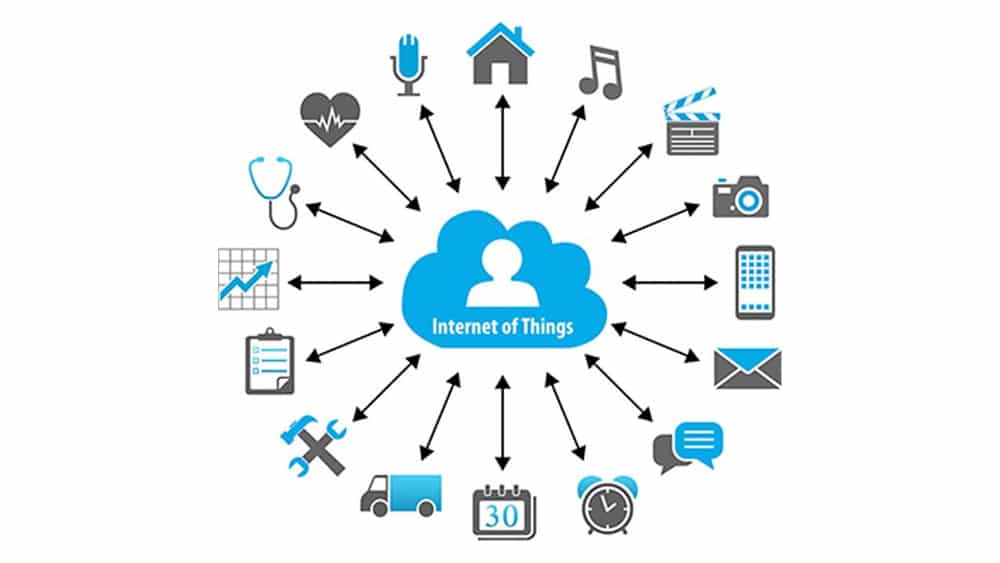
Organisations are experimenting with extending data clusters to the edge to reduce latency, gain operational efficiencies and improve products and services. Fast food company Chick-fil-A is running Kubernetes on 6,000 kitchen devices in all 2,000 of its restaurants. This is part of the chain’s internet of things (IoT) strategy to collect and analyze more data to improve throughput, operational efficiency and, most of all, customer service.

The move to M2M dovetails with the notion of catering to local markets using local data. This will foster new design architectures that take into account privacy, security and regulatory concerns regarding the “frame of reference” of data — i.e., the notion of localised data being more valuable than global data in terms of its usability and mining. When organisations consider modernizing their IT operations and changing the way microservices are deployed — especially large multinationals with a wide global reach — it becomes critical for them to consider the advantages of targeting a geography locally, and realizing that there are new tools and ways of doing this.

Another facet driving the change in design thinking is the need to make maximum use of computing resources. Whereas the decision frequency of a person ranges between 1-15 hertz, which means that people can decipher information and make a decision in about ½-1 second, today’s microprocessors can operate at gigahertz and process information in nanoseconds. If these processors are not operating as fast as they can, they are just space eaters. Organisations want to keep their processors as busy as possible, which means designing for billions of decisions or operations per second. Otherwise, they may end up paying for unused capacity.

Signs of M2M

M2M technology: business value explained - Itransition

Two examples of M2M architecture are SAP Leonardo and KubeEdge. Through SAP Leonardo intelligent technologies and capabilities, SAP is integrating its ERP applications with IoT platforms, combining traditional IT services with M2M capabilities. Importantly, SAP can address broader markets than niche IoT platforms.

KubeEdge, built on Kubernetes, is an open source platform for building edge computing solutions that extend to the cloud. The platform supports network, application deployment and metadata synchronization between the cloud and edge. It extends the Kubernetes ecosystem from cloud to edge and provides benefits such as lower latency, low resource consumption and applications at the edge that can run in offline mode.

The road ahead

Are you ready for the road ahead? - Life after COVID-19 - LM HR Consulting

We are starting to observe a shift in IT design from IT for humans to IT for machines. These design patterns deliver richer experiences because they enable substantially more processing in the same experience time. Design shifts will lead to changes in batch processing and stream processing architectures, which are constantly being updated and reimagined with better M2M capabilities. Data and analytics will continue moving to the edge where the machines are, to analyze the massive influx of IoT data and provide maximum throughput with minimum latency. Rapid deployments of these transformational architectures may not be immediate, but over time these new architectures will be a forcing function for IT modernization.

Teams, not individuals, are the greatest achievers in Technology.

How to implement as DevOps culture | CIO

Developing high-performing teams will be the focus of many enterprises in 2020. Companies will confront the fallacy that pace is what unlocks the company’s full potential and recognize that how the company organizes its people and information flow is what determines performance.

Organizing for a dynamic and complex environment requires a much different structure than the traditional command-and-control pyramid. Talent acquisition and development strategies must be built on a team-of-teams approach consisting of multidimensional individuals, rather than traditional siloed teams consisting of single subject matter experts. Put differently, the focus shifts from developing so-called 10x individuals to developing 20x teams.

Lessons from the battlefield

Vector Hand Drawn Leadership Concept Sketch. Stock Vector - Illustration of champion, abstract: 113869486

The transformation of the battlefield and the U.S. military’s adaptation offers an excellent case study, specifically the experience in Ramadi, Iraq. The unpredictability and dynamic conditions of the battlefield are similar to the current business environment: combating insurgents who utilize asymmetrical tactics and are well equipped with the latest technology, while having to maintain and grow the customer base (citizenry).

The “clear, hold and build” strategy that worked in Ramadi revealed that capabilities such as raids had been elevated to the level of strategy. Modern business has done something similar by elevating the increase in pace, agile and DevOps capabilities to strategy. However, merely holding meetings more frequently and in a different manner falls short of desired results. What companies need, as the military learned, is more flexible joint power from multidimensional teams that provide multiple options in the face of volatility, rather than the limited options of a traditional pyramid of teams.

As retired U.S. Army General Stanley McChrystal explains in Team of Teams, the military in Iraq needed to be not only efficient but also adaptable. It became a priority to focus on reconfiguring to be able to deal with volatility quickly. Simply deploying more resources and putting more people to work, to become more efficient in the current operating model, was not enough. As McChrystal points out, the traditional pyramid constrains team productivity due to choke points, ineffective communication channels, stifled creativity and inadequate response time.

So the military created linkages between teams, put people from different service branches and agencies on the same team, and shared information widely so everyone understood the larger mission and could make decisions accordingly. McChrystal understood that “technology had changed in such a way that management had become a limfac [limiting factor].”

The same is true in today’s business environment, where an explosion of technological progress — improved capabilities to track, measure and predict via big data and advanced analytics; moonshot projects; and unconventional business models — has created a more interdependent, fast-paced and complex business environment. In this environment, companies need interconnected multidimensional teams that can adapt and scale.

The new teams

Microsoft added all these new features to Teams in February and March - MSPoweruser

The new interconnected teams have diverse skills that capitalize on the team’s collective intelligence and increase a team’s productivity. The shared sense of purpose and mentoring that occurs within the team not only strengthens the relationships and performance but also mitigates knowledge gaps between senior and junior employees.

Populate these teams with double-deep personnel and now you have the ability to scale across the company, purposefully cross training your people to fill gaps. This creates a natural talent pipeline. Rotating people through different teams means employees advance through project-based promotions and team assignments rather than the traditional subjective requirements.

In order to be effective and maximize the potential of these multifaceted teams, they need to be empowered to make decisions. This does not mean they operate totally on their own, but they “have implicit trust that their senior leaders will back their decisions,” as Navy SEALs Jocko Willink and Leif Babin point out in Extreme Ownership. With proper decentralized command, teams that are closest to the situation can execute in a manner that supports the overarching goal without having to ask for permission.

In 2020 leaders will determine how to, in the words of McChrystal, “scale the fluidity of teams across entire organizations” amidst the chaos of ongoing business transformation. Ultimately, building better teams will build better individuals and enterprises. The ability to develop and lead a network of high-performing teams will be key to business success in the post-digital age.

Workday Payroll dashboards: How to Get the Most Out of Them

Como construir e manter uma boa reputação on-line no ambiente escolar

The future of work is bringing new challenges for Human Capital Management (HCM) practitioners, especially as the skills shortage becomes a day-to-day reality. In the near future, the people responsible for people in your organization — from CHROs to payroll specialists, will need more time to strategize, analyze, and innovate. With truly innovative HCM technology, not only will employees have more time, employee productivity and engagement will increase.

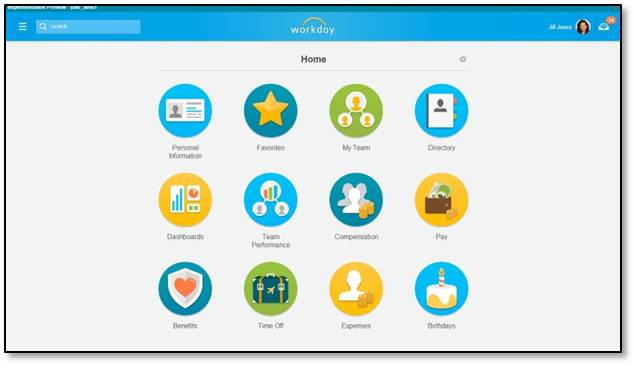
Workday Payroll is designed to help employees increase efficiencies, eliminate errors, and anticipate changes, particularly around compliance or tax related items—a competitive advantage in a fast-changing regulatory environment. Plus, Workday Payroll not only saves employees time, but perhaps most critically, reduces questions to the payroll department and increases insight around the complex process of compensation.

Workday Payroll best practices

Our Workday experts at Anteelo recommend starting with the following simple steps to drive user engagement and adoption to get the most out of Workday Payroll dashboards:

Share—and share often.

Basic Earnings per Share vs. Diluted Earnings

For employees involved in the day-to-day work of payroll (or any HCM work), new technology requires that management does their due diligence in communicating the change. But we’re all bombarded with hundreds of messages every day; so this requires creating messaging that has meaning:

  • Empathize with the difficulties of change (even positive change is stressful!).
  • Make it personal: Share how Workday Payroll dashboards will benefit both employees and administrators in day-to-day work. For example, teach employees how to easily compare pay periods and make updates, such as tax elections, from one place.
  • Show payroll partners and administrators how the dashboard gives them instant visibility into the status of each payroll, retro differences to be paid, and employees affected by regulatory changes (such as tax rates).

Follow-up with non-users.

? How to Take Meeting Notes People Will Actually Use [Templates & Examples]

It’s simple: Ask employees who aren’t using Workday Payroll dashboards why they aren’t. Engage employees by providing more training, enabling one-on-ones with power users, giving employees extra time to learn about the dashboards, and/or scheduling frequent check-ins to answer questions and provide encouragement.

Invite existing users to share why they love Workday Payroll dashboards.

Workday@Yale

Ask employees who are using Workday Payroll dashboards what they love about it. And then ask them to share this with their peers. Happy users are the best advocates for new technology. Product evangelists—your employees who love payroll dashboards—can greatly influence others to get on board.

Make sure updates go smoothly.

Top tips and tricks to keep Windows 10 running smoothly | Computerworld

Build a repeatable test plan for updates and always communicate any upcoming changes to Workday Payroll dashboards far in advance. If you need help, our experts can help you develop a solid testing plan that is both repeatable and not overly taxing on resources.

Plan ahead—and communicate frequently—about big events, such as audits.

Behavioural auditing | Ethical Boardroom

One of the advantages of Workday Payroll dashboards is that they enable users to start the audit process early. Help employees understand that auditing early and often, using the tools in payroll dashboards, can make the end of the year far less stressful—and even reduce the need for overtime around the holidays.

Creating a positive, engaging user experience is the first step to getting the most out of Workday Payroll.

It’s imperative that employees doing the day-to-day payroll work need to know how Workday Payroll dashboards help them personally do their jobs better. Organizations can drive greater adoption and engagement by actively sharing the employee-centric benefits of payroll dashboards, encouraging existing users to advocate for the technology, and making it easier for non-users to become engaged users.

Business continuity with a remote workforce-Checklist

Maintaining Business Continuity with a Remote Workforce | Architect Magazine

Whether dealing with the current coronavirus (COVID-19) crisis or anticipating a future natural disaster, organizations need to prepare for emergencies that require employees to suddenly switch from a corporate environment to a home office. Even once the crisis arrives, organizations might have to drastically adjust their plans to address the scale required. Continuity plans must encompass not only the technology required to keep the business up and running but also the human aspect — making sure employees are well-trained and prepared to work remotely. As the size of the remote workforce suddenly increases, here is a checklist for IT leaders to consider when tackling the technology piece of the puzzle:

Network Capacity Planning 101: Performance & Visibility Requirements | Kentik

  • Network capacity planning: Conduct a capacity analysis to determine whether internet bandwidth is sufficient to handle the increased WAN traffic that occurs when large numbers of employees access the network. Additional items on the capacity planning checklist include firewalls, VPNs, and other remote access-related technologies that might be overwhelmed by the increased volume of traffic coming from outside of corporate headquarters.

What Is Cyber Monitoring? - Entrust Solutions News

  •  Security monitoring: Intensify activities designed to detect and prevent attacks. Hackers are likely to take this opportunity to increase malicious activities. “Secure the Human” training can be delivered remotely to ensure that employees remember the organization’s security practices.

What Is Identity Access Management (IAM)? - Cisco

  • Identity and access management: Beef up identity and access management for remote workers through methods such as multifactor authentication.

28 January - Data protection day

  • Data protection: Ensure that security is extended and corporate data is encrypted to prevent the unintentional or malicious exposure of sensitive data.

5 Reasons Why You Should Avoid Free VPNs | CyberDB

  • VPNs: Make sure that VPN agents are installed on every device that connects to the corporate network to provide secure remote access.
  • Devices: Prepare for a shortage of devices to support the growing number of remote workers. Have a contingency purchase plan as well as a template for quickly configuring the device and loading the appropriate software.
  • Bring your own device (BYOD): Consider BYOD as supply chains are strained and the ability to get the needed hardware to employees becomes increasingly difficult. Using a cloud-based portal, employees can self-register their devices and download VPNs and other security tools, with the ability to segregate corporate data from personal information.

Virtual Desktop Infrastructure (VDI) - autvdi

  • Virtual desktop infrastructure (VDI): Consider deploying a thin client architecture for remote workers as another option. However, upfront planning is required to make sure the thin clients are available and that the back-end server infrastructure is in place to support the thin client model.

7 Ways You Can Foster Collaboration in the Workplace

  • Collaboration: Provide strong communication and collaboration capabilities to help keep employees productive and engaged. Organizations may want to look at videoconferencing tools to compensate for the lack of face time to help employees feel more connected. Collaboration platforms such as Microsoft Office 365 with Teams activated and G Suite, as well as videoconferencing services such as Zoom, are providing new ways of working, connecting and collaborating. Training employees on how to conduct work in these virtual spaces is critical.

Omni-channel vs Multi-channel Support — What's Right for Your Business

  • Omnichannel support: Be prepared for a significant volume increase for IT support. Some employees may have been abruptly moved to a remote access environment, while others may now find themselves with new devices, software or tools they have never used before. And as a remote working model typically provides increases in flexibility, spikes in support needs may not follow the traditional patterns of regular business hours. The IT department needs to be prepared to offer omnichannel and remote support, including video options for face-to-face communications. Of course, service desk employees may themselves be working remotely, so pay special attention to make sure they have the capacity and the tools to respond to service desk issues from their home offices. Proactive and predictive analytics tools, combined with an easy-to-use support portal, can drastically reduce the calls to a strained service desk for rudimentary problems.

As we all know, even the best-laid plans don’t always work perfectly. In the midst of a global crisis, organizations might find that their business continuity plans haven’t accounted for an unprecedented level of scale, urgency, capacity and employee needs. In these instances, organizations should stay in close contact with their preferred vendors. There is no need to go it alone when expert help and support are available.

Unexpected challenges can cause maximum disruption to people’s lives and to business. The way in which we mitigate risks to ease the strain on businesses and their employees will ensure an organization’s ability to continue into the future.

FinTech vs. TechFin: What is the Destiny of Global Finance Economy?

Fintech vs. techfin : the future of finance and banking - iPleaders

“There are two big opportunities in the future financial industry. One is online banking, where all the financial institutions go online; the other is internet finance, which is purely led by outsiders.” – Jack Ma

The Finance and banking economy across the whole globe is facing a new level influx of changes coming its way since the past many years. And the changes are in no way showing a picture of stoppage – giving no breather to the finance sector to hold and react.

First from a traditional banking system to digital then from fiat currency to digital currency, and now while the Finance world was still getting habitual to all this modernism, a new trend entered the domain, introducing itself as the future finance and banking ecosystem.

This latest trend in banking technology that is soon making an entry in the world is TechFin. But what is TechFin? And what impact would it carry?

This latest trend in banking technology that is soon making an entry in the world is TechFin. But what is TechFin? And what impact would it carry?

While closely resembling the concept that we have already seen and warmed up to, FinTech, the idea in itself is very different. Something that is now slowly causing the rise in search engine queries and queries that financial software development agencies are receiving: FinTech vs TechFin: Is there a difference? And if there is, then where the future of Finance and Banking lies between TechFin and FinTech?

Let us try to look at the answer of both in this piece.

The beginning of modern financial software development began roughly 10 years ago during the global financial crisis, which convinced the incumbents that they were fighting for survival. This provided a great deal of room for innovators to build businesses, and this is when Square got started, which was a seminal moment.

And as the economy got stable, so did the hold of players who entered with the support of financial application development companies to take some of the banking work away from banks. Ever since Square and PayPal, the innovations in Finance industry saw no stopping. One after another new offerings kept coming in the domain, promising to set newer standards in user experience.

And the movement that started then has today come to a point which was difficult to imagine years ago – the stage where tech and finance merge.

While FinTech had already created a pivotal position in the users’ life, TechFin – a.k.a the movement – is something that will bring a monumental shift in not just the use of financial institutions but also the reason for their existence.

Before we move on to the phases of how FinTech came into existing and where the future of FinTech is headed – TechFin, let me answer the glaring question first – FinTech vs TechFin: What is the difference. For the article will only dissect the other in much detail from here on.

Difference Between FinTech vs TechFin

FinTech and TechFin: Which is the Future of Banking? | Coinspeaker

Putting it simply, FinTech is the concept where the Finance industry starts using technology to offer better customer experience. TechFin solutions are where the Technology Domain enters the Finance sector to change how users interact with the industry.

The examples of TechFin organizations include Google, Amazon, Facebook and Apple (GAFA) in the U.S. and Baidu, Alibaba & Tencent (BAT) in China.

Now that we have looked at what differentiates both the concept, let us talk about the different phases that the Finance sector has seen and identify the space where TechFin entered.

The Evolution of Finance and Technology

The rate at which the Finance and technology industry is evolving is one that is in many ways bringing a stark transformation in the domain. What was Finance decades before is not what it is now and won’t be the same next decade. Let us track the steps of Finance and Technology’s unison movement.

Stage 1: Exclusion

Netizens enraged by elementary school's “No Technology Challenge” | SoraNews24 -Japan News-

The first step of fintech or techfin evolution is the era when there was no technology in the picture. Financial consumers had to wait in long lines in banks to perform any and all types of money related work.

Stage 2: Mobile Payments

Yesterday, today, and tomorrow of mobile payments

The next phase was when payments – a small fragment of the banking sector came on mobile banking services. Users now standing in queues were making payments of bills, electricity, and water on mobile through apps that came majorly from non-banking institutions.

Stage 3: Mobile Basic Banking – The Now

Mobile banking in Belgium: a guide for expats | Expatica

Seeing the ease that this digital revolution in finance was offering to the millions of their user base, a number of banking institutions also entered the space by developing a financial application for their bank.

Meanwhile, the non-banking technology companies too expanded their offerings and entered services like lending, credit facility etc. This stage, right here is where the Finance industry entered into a competition with technology firms to emerge as the best service provider – the stage which was known in the fintech app development world as online banking.

Stage 4: Full-Service Mobile Banking – The Future of Banking Technology 2020

The Top Mobile Banking Trends For 2020 | PaymentsJournal

The stage where the Finance and technology combination is headed on to next, is one where the competition that started in stage four only becomes much cut-throat. The time to come is set to move from FinTech to TechFin. The technology based companies who made an entry in the banking services will only make their presence stronger and the Financial institutions will start involving technology at a greater level in their processes.

Since we have looked into both – what differentiated FinTech from TechFin and the evolution of Finance, it is time to give an in-depth share of attention to what is TechFin and what are TechFin benefits, at the outlook of the basis on which it operates and where does the future of financial services industry lies.

The Basis of TechFin Ecosystem

A. Customer Base That is Willing to Experiment

What is Customer Engagement? A Complete Up-to-date Guide

The biggest perk that operates in the favour of TechFin is the fact that the user base that a technology firm is able to attract. A number that almost always is much greater than the number of users a finance firm is able to acquire.

One of the reasons why technical companies are able to attract more users through their finance app development effort is also because of the subconscious image. When someone uses a banking app, there is a subconscious fear of something going wrong, while the same is not there when the app offering the same service comes from a non-banking parent company.

Lastly, the consumer base that is present in the case of TechFin apps is a lot more diverse as compared to the restricted FinTech user group.

Lastly, the consumer base that is present in case of TechFin apps is a lot more diverse as compared to the restricted FinTech user group.

B. A Strong Technical Infrastructure

7 Examples of Technological Infrastructure That Your Small Business Needs to Succeed • GetHow

The reason why technological firms have an upper hand when it comes to boasting their infrastructure excellence is very obvious. When a technology firm enters the finance domain, it is already armored to handle the user flow of millions in real-time.

After all, even in the race of coming out as the ultimate finance sector leaders, the finance companies take help of technical firms to help develop their infrastructure. This partnership is a key enabler of the future of the financial industry.

C. Better Mechanisms of Data Management

What Is Data Management?

The whole data related cycle in case of TechFin firms is a lot better than that of FinTech agencies. The difference in how well the data flows in TechFin vs FinTech can be seen in the simple fact how users are a lot more comfortable sharing their data with Technological firms as compared to Financial.

While on the one hand, one of the biggest challenges of banking software development is to get quality data out of the users, the technological firms, on the other hand, simply have to give the users a form and they themselves send it back, all filled.

In addition to this, the system and algorithms needed to manage data are in themselves a lot more readily available to a technological company than their financial counterparts.

D. Similar Regulation Set

Taming the giants: Why big tech needs regulation

Unlike normally assumed, the level of regulation levied on technological firms that enter the finance domain are the same as the financial institution’s who involve technology in their offerings. So, there is hardly any legality that is standing in front of TechFin as a roadblock.

The TechFin segment of the Finance sector, as we just read, is paving the grounds to enter and transform the segment. But does it mean the end of traditional banking as we know it?

The answer of where is the future of finance, lies with the finance economy itself. The truth is, the time will come when TechFin and FinTech companies will merge and their offerings will become similar if not competitive.

And when the time does come, the true benefit will lie in FinTech collaborating with TechFin and becoming one with the latter. For, individually, both domains, no matter how far and big they grow, will have some spaces left to be filled. Plus, the mix of subconscious carefulness and easy flowing user experience will only be achieved upon the transformation of FinTech into TechFin. Now, whether the merger happens or not, one thing is certain – the Banking industry is destined to change and Fintech transformation is bound to happen. It is not going to be the ecosystem that Generation X operated in.

Enterprise Mobility Solutions: Why to Invest in Them

Benefits of Software and Mobile solution for CPGs - Ivy MobilityGone are those days when employees were supposed to check the notice boards or contact management for every query. Today, they can connect with the management and get the right information/product in real-time regardless of if they are in the office or at home. And this has been made possible by Enterprise mobility solutions.

Enterprise mobile apps are transforming the working environment of the company. They, unlike business apps, are targeting the employees of the company and providing them with a surplus of options, making it necessary for the organizations to look into Enterprise mobile application development.

But before we jump into the benefits the mobile apps avail to the Enterprises – the one that differentiate enterprise apps from consumer-end solutions, let’s have a look at this data giving a hint of the Enterprise app market:-

  • Enterprise mobile market is expected to hit a revenue of $430 billion by the year 2021.
  • 4.67% of companies acknowledged that Enterprise mobility solutions are becoming the need of the hour.
  • 65% of companies are using 2-5 enterprises apps, while 27% are relying upon 6 or more applications for catering to the needs of the employees.
  • 5.66% of companies decided to develop Enterprise apps in the coming 3 years.
  • 47% of agencies observed an improvement in internal communication, resulting in better relationships and lower disputes under the roof.
  • 59% of workers in America worked beyond their 9-to-5 shift because of Enterprise mobile apps.
  • Around 250 hours have been saved per year using Enterprise app, which is nearly equal to 6 additional working days.
  • 77% of employers shared that the market for Enterprise apps has grown in the past two years.
  • 39% of employees admit that they are using Enterprise mobility solutions due to efficiency potential they have.
  • 19.23% of increase has been experienced in terms of customer satisfaction.

With these interesting fact known to you, let’s check the reasons to build Enterprise apps:-

1. Effective Communication

What Is Effective Communication During a Divorce? - mycollaborativeteam.com

Various companies still rely upon emails and other desk-based means of communications. While these methods sound effective, they act as a barrier in communication when the employees are not at their desk or are into field work, resulting in isolation and disputes.

Enterprise business solutions, in this scenario, reside on their phones and provide them with a chat feature which is faster, easier and more effective than an email. An example of this is IBM launching its video streaming application enhancing workplace communication. It enables them to enjoy communication on the go and the best part, share the information with multiple people in group conversations without undergoing the risk of forgetting to click on the ‘Reply All’ button.

2. Real-time Data Sharing

Real-time Data Sharing - SOSY A/S

Unlike the traditional methods that demand staff members to prepare offline records and hunt for getting every single information, the Enterprise apps rely upon the cloud technology and offer quick and comfortable sharing of files and information anytime and anywhere. This encourages organizations to look forward to investing in Enterprise app development.

3. Higher Productivity

Excellence in Financial Management: Three Frameworks for Higher Productivity

One of the benefits of Enterprise app software is that it comes with various handy tools that help them work efficiently. For example, the calendar aids the employees to monitor their work schedule, while the push notification feature provides them with information about the upcoming meeting, project deadlines, and more.

4. Better Employee Involvement

State of Employee Engagement in 2019: 4 Key Points

An Enterprise application also helps the management to bring all the workforce on the same platform. It gives the employees an opportunity to freely give their feedback, share relevant information, make an announcement, and much more effortlessly – rather than waiting for their turn or visiting the management personally.

These apps also help organizations to realize the importance of education app in Enterprises and thus, provide the facility to their workforce.

This, as a whole, improves the relations and build effective work culture and productivity, prompting the organization to look ahead towards how to build Enterprise apps.

5. Seamless Record Maintenance

Equipment Maintenance Record Keeping: How To Optimize It?

Another reason behind rising Enterprise demand for custom app development is that it gives management an escape from the manual record management process. These apps enable employers to keep an online record of all their employees and retrieve the data easily and anytime based on different factors, such as age, department, contact number, etc. And, in this way, prevent them from going through the hassle of checking each record to find the right employee.

Let me explain this with an example. Suppose, you have a French client and are finding language as a barrier in communication. You need someone to have fluency in the French language immediately.

Now, if you talk about the traditional method, you were supposed to ask every individual to find the right person. Whereas, in the case of Enterprise mobility solutions, you can easily filter the data and contact the candidate with the required skills.

6. Robust Security

Robust & Secure, deep-level security secures school networks

One of the prime reasons to invest in Enterprise app development is that it adds security to the process. These apps, by integrating technologies like AI and Blockchain, enable the companies to ensure that their data is safely and securely stored on the cloud.

7. Improved ROI

6 Quick Tips to Maximize ROI from Your HRAs - Medicom Health

By providing all these features, the Enterprise mobile apps enable the employees to work seamlessly, effectively and safely, which eventually boosts the ROI.

Now as you know the reasons why invest in Enterprise mobile apps, it’s evident that you must be looking forward to hiring an enterprise mobile application development company in New York and get an app ready.

Taking the same thought forward, let’s see what it takes to hire an enterprise mobile application development company in New York, Florida, Texas, Middle-East and European countries for your enterprise app needs.

1. Experience

Sell an Experience, NOT a Product or a Service | by Kory Farooquie | nextgenninja | Medium

The foremost factor to consider to develop Enterprise apps is the experience of the app development company. If the company is highly experienced, it will be well-versed with the challenges and trends of the mobile industry as well as that of yours, implying they will provide you with the best solution as per the market needs.

Whereas, on the flip side, a newbie company might fail to deliver the application at the right time or may serve you with a low-quality product.

2. Platform

Android vs iOS, Which One Do You Actually Need? | Cashify Blog

The decision of investing in Enterprise Android app development or Enterprise iOS application development or both also depends on the fact that the platform chosen makes a huge difference in the development area, timeline, cost, and the corresponding outcomes. This is because every team has its own level of expertise at tech stack associated with developing an application for Android, iOS or both the platforms individually or using Cross-platform app development approach.

3. Design

Design - Mediastrasse

Many companies focus completely on the coding part, leaving no time for the design element. An outcome of which is that they fail to gain the attention of the target audience and thus, enjoy higher outcomes from Enterprise business solutions.

So, it is necessary to learn more about the designing skills of the company you are planning to hire before getting into a deal.

4. Portfolio

A portfolio, like a window, can help you to get a comprehensive look into their skills and visualize the type of application you will be served with. So, do not skip this step.

5. Communication

Though often overlooked, the level of communication also makes a difference in the choice. This is because if a mobile app does not connect you throughout the process, you would find it hard to know what and how they are developing your application, what challenges they are facing and how they are mitigating them, and ultimately fail to understand the impact on your application. In the worst scenario, you get delivered an app solution that is entirely different from the idea you shared, implying you need to ask them to invest additional effort and time in return of funds to get the same facilities available. Thus it is safe to opt for the enterprise mobile application development company in New York or other areas around the globe to get a  top-notch application.

6. Security

What Is IT Security? - Information Technology Security - Cisco

Considering the level of sensitive data stored/shared/exchanged on the platform and the growing interest of hackers into the mobile data, it is again important to consider an app development team that looks into the mobile app security best practices and strive to deliver a secure experience.

7. App Cost

Estimated app development budget bifurcated to popular app types

Last but not least, check how the cost to develop an application is defined at their end – do they provide all the services in a single package or has added a price tag to each service individually. Depending on the answer to this question, check for the company that can deliver the right set of services within your budget.

As covered in this article, Enterprise mobility solutions are becoming an indispensable part of the organization. They are encouraging the enterprises to serve their employees with the right insights and resources, and thus empower them to add more profits to their business.

So, in case you are also an Enterprise, look forward to investing in the process of how to hire the right mobile app development company and introduce Enterprise mobility solutions to your traditional process.

Blockchain Beyond Cryptocurrencies: 22 Use Cases

Yes, Blockchain Can Be Hacked: 3 Ways It Can Be Done

If you look back at the Evolution of Blockchain, you will find that the technology only came into the limelight because of its association with the groundbreaking element that Bitcoin is. Bitcoin and Blockchain were the two terms that were used synonymously by a number of people around the world till even some years back. But in the past few years, as the world got clearer with what the technology is about, the space between Blockchain and Cryptocurrency has extended and several best use cases for Blockchain have emerged sans cryptocurrencies.

And today, the non- cryptocurrencies Blockchain has not just established itself as a technology that Bitcoin is just a subset of, it has also marked itself as the solution of the two problems that all businesses, across industries, unanimously face – Security and Lack of Transparency.

In this article, we are going to look into the top use cases for blockchain in different industries, along with some brands that are transforming the question – what is blockchain technology to what are the use cases for blockchain technology in business and life.

Blockchain Technology Timeline

Blockchain Use Cases by Industry

Brands That Help Define the Use Cases For Blockchain Technology

FAQs About the Real World Blockchain Use Cases 2020-21

Let us briefly look back at how far the use cases for blockchain technology be tracked and the route it has charted for itself in the blockchain evolution timeline graph.

Blockchain Technology Timeline

As you can see in the Blockchain Technology Timeline above, the tangent on which Blockchain is walking is an answer in itself to all the naysayers who doubted its worth and called it a hype that would soon die.

The direction in which Blockchain is headed in and the direction it started from is a sign of how far and fast the benefits of the disruptive technology have been accepted and added in a number of processes across a range of different industries, something that we have detailed in our handbook curated especially for businesspersons, called Entrepreneur’s Guide to Blockchain.

Benefits that come attached with the use cases for Blockchain technology have not gone unseen by the industry leaders. The discussions that were earlier focused on Bitcoin and Cryptocurrency has now been fixated on to the Blockchain technology.

Here’s what the leading tech evangelists are saying about Blockchain –

Blockchain technology, along with its benefitting features is now playing the main character of successful industries’ growth stories – an event that is triggering the demand for Blockchain App Development Agency that would help businesses achieve greatness and profitability with the disruptive technology. There are several blockchain technology real use cases that show how the technology, even in the absence of cryptocurrency, holds the potential to change the world.

Here are the top use cases for Blockchain that have been recognized in a range of different industries –

Blockchain Use Cases Beyond Cryptocurrency

Here are the Best Uses for Blockchain that have been recognized in a range of different industries –

1. Banking

Outlook On Banking Sector Positive But Focus On Big Players

When it comes to the Banking sector, there can be a number of use cases of Blockchain technology in Banking beyond the exchange of digital currencies. Some of those prominent ones which involve blockchain and cryptocurrency to one extent or the other are:


  • Fraud Reduction – By bringing all the information on a distributed ledger with a timestamp and batches of specific transactions with a link to another block, the blockchain use cases in banking will make it impossible for the hackers to break into the system without the timestamp of the breach getting highlighted.
  • KYC – It is estimated that banks spend somewhere around $60 million up to $500 million per year in their ‘Know Your Customer’ project. These practices are followed to lower the money laundering instances and to keep terrorists out of the banking ecosystem. If the KYC process is brought on Blockchain, the verification time and associated cost will get lowered by manifold.

2. Cybersecurity

Cybersecurity looks to the cloud to protect data at sea

When it comes to cloud and the typical computer network usage in business, centralized servers are usually used to store the data. Now, when you save all your business data on a centralized system, you open yourself to risks like corruption, data loss, human error, and hacking.

But when you put your data on a distributed, decentralized system by employing Blockchain-as-a-Service model, the instances of hacks reduces by manifold.

3. Internet of Things

Internet of Things: What It Is, How It Works, Examples and More

The mesh of connected devices, while connecting all the phases of a user’s life with each other, also brings it to a vulnerable position. When you operate in a connected ecosystem, the moment your one device gets hacked the chances of your connected devices to get attacked also increases by manifold.

Through Blockchain infused IoT adds the capability for you to exchange data on the platform instead of a third party. Also, since the devices are addressable with the benefits of the technology, businesses get access to the usage history of the connected devices, which comes in handy at the time of troubleshooting.

4. Unified Communications

What is Unified Communications •• Communication tools | 3CX

Blockchain enables safer, faster, and a lot more reliable set of automated communications. While automated conversations are already a big part of a number of industries, the communication happening in an automated mode is mostly asynchronous – something that Blockchain can change.

With Blockchain, companies would be able to have more bi-directional and authorized communications.

Also, as the world is now moving towards chatbots, Blockchain would be the business solution for the time when bots interact with each other and the problem of transparency and time stamping comes up.

5. Government

The government is hyping digitalised services, but not addressing a history of e-government fails

The blockchain is a hot-topic in the government and political backdrop. There are several Blockchain government use cases that improve the government service quality, safeguards the citizen’s property rights, and cuts the red tape, all the while improving the transparency element in the system.

While governments all across the world – from Dubai to China and the US are exploring the Blockchain opportunity to better the nation’s lifestyle, the trend of adoption is mostly restricted to Ethereum.

Here are some of the examples of how the different Governments are employing Ethereum Blockchain to better their nation –

  • Dubai is prepared to become a completely integrated Blockchain based city by 2020.
  • Estonia matured in a ‘digital republic’ ecosystem by shifting a number of its national system on Ethereum Blockchain.
  • Chile makes use of Ethereum to track down the finance and data from the energy grid with the aim to curb exploitation and corruption by making the data available for the citizens to see.
  • Canada is testing the platform for providing transparency to how the government use grants for easing the concerns that citizen’s show related to corruption and misappropriation.

6. Charities

10 Great Chicago Charities to Support - PureWow

The number one reason that usually keeps people away from making a donation is not knowing whether or not the donations that they are making are even being used for the right reasons. When Blockchain solutions are introduced to the system, the technology helps ensure that the money is being used exactly where it was supposed to.

In order to bring in some transparency in the system, a number of Bitcoin-based charities are coming into existence that ensures that allows the donors to view how their money is being used.

7. Healthcare

Empowerment will be at the heart of the new healthcare experience

The onset of multiple blockchain use cases in healthcare is the example of how disruptive an industry could be when clubbed with revolutionary technology. And this is the reason why Blockchain has found a place in the 10 healthcare trends that would be dominant in 2020.

The fact that Blockchain comes with an immutable architecture makes it possible to store the EHR data in a way that is safeguarded from any or all instances of hacks and breaches. Also, several experienced blockchain app developers are using the technology to help with the creation of new medicine or a more personalized treatment regime.

8. Ride-Sharing Economy

Human Trust: The X-Factor of the Ride-Sharing Economy? | by Suhasini Gadam | DataDrivenInvestor

Mixed with the ride-sharing architecture, Blockchain has the potential to make the industry pioneers like Uber make a run for their money. When you look at the Uber ecosystem you will find issues like the brand making a cut from driver’s income or it calling the shots on all the terms and conditions that are majorly partial towards the brand’s profits.

By introducing Blockchain in the ride-sharing economy like what Arcade City does, the control comes in the hand of riders and drivers. They get to make all the decisions without looking up to a ruling agency.

9. Supply Chain

Top 25 Supply Chains of 2020 | IndustryWeek

By identifying the production processes and components and then storing the information on Blockchain, a business can monitor their supply chain process from the raw material stage to the end delivery stage.

For example, Walmart uses Blockchain to enable its employees to scan the goods in the store’s app and then track them from the harvesting stage to the time it reaches the store floor. On the other hand, Makers use technology to monitor the cargo ships.

10. Encrypted Messaging

Encrypted Messaging – What Is It, Why Should You Use It and What Are the Best Apps? - Pixel Privacy

Blockchain takes the end-to-end encryption to a new level by introducing decentralization to the mix. Brands like Crypviser are doing the task of creating of a Blockchain-based communication platform perfectly.

Through a platform of this sort, businesses get to offer their users a place where they can make the to and fro of encrypted messages that have minimal to zero scopes of getting hacked.

A platform like blockchain-based encrypted messaging solutions is especially helpful when incorporated within an Enterprise system.

11. Elimination of Counterfeit Products

The fact that Blockchain technology is immutable, it becomes a lot easier for businesses to find out and trace the chain of asset ownership. By storing the serial number on a Blockchain, all the involved parties are able to verify whether or not the product in question authentic.

De Beers, the world’s biggest diamond producer, has created an immutable digital record using Blockchain which they use to keep the record of registered diamond and lower the conflict diamond transactions.

12. Contracts

The self-executing programs are one of the best offerings of Blockchain to the business world. Smart contracts Blockchain is designed in a way that they check the contract rule, verify, and process the transaction all without the need for an intermediary involvement.

Smart Contracts Blockchain are used in a number of different scenarios and across a number of different industries that deal with the creation of contracts in their processes.

13. Pharmaceuticals

Pharmaceuticals

The World Health Organization has estimated that 1 out of 10 medical products that are circulating in the low or medium-income countries are not just sub-standardized but also falsified. To lower the instances of pharma fraud, Verifier – a smartphone app that uses the phone’s camera to conduct a spectral analysis on the drug and loads it on Blockchain for verification of the drug’s medical footprint. It is just one of the blockchain case study, there are a number of other businesses working to make the pharma industry decentralized.

14. Microloans

Microloans: Small Loans for Small Businesses | The Simple Dollar

Through the inclusion of decentralized blockchain ledger getting microloans approved and credited in the accounts have become a real-time, secure practice.

Twigga is an example of how Microloans work with Blockchain technology. The B2B Logistics platform for food stalls in Africa had expanded its services into adding financial services in the suite for their customers, with the help of Blockchain.

While they use AI to find out the credit score on the basis of mobile data, they incorporated Blockchain to manage the complete lending process from the application of loans to getting offers and accepting the conditions of repayment.

15. Advertisement

Delivering timely and relevant ad is every advertiser’s aim. And the answer to how Blockchain will change the world of advertisers lies in using the technology to navigate the tracks of the different service providers and linking them all together – an event that ensures the right people are targeted at the right time.

Also, it saves the advertisers from losing money when the hackers create fake web traffic and make fake bots visit the site in place of real humans by tracking the origin of the visitors and gauging if they are authentic.

16. Affiliate Marketing

Earn Passive Income through Affiliate Marketing Program

The concept of Affiliate Marketing lies in businesses paying a set of the commission to the people who would promote their product on the social media platforms. The concept in itself is based entirely on trust. Trust that the people won’t remove the post after getting a commission or that they won’t use fake ids for promoting a website etc.

Smart contracts Blockchain functionality ensures that the money is transferred to the people only when they have done on ABC task.

Seeing these Blockchain use cases and how perfectly the technology is able to decentralize the various economies, a number of the world’s biggest brands, with the support of the Top Blockchain App Development Companies, have now started exploring the technology with the hopes to turn their business growth story alongside the growth in Blockchain future uses.

In Blockchain Use Cases Beyond Bitcoin, this is the section where we look at the brands that have decided to get involved with Blockchain. As you read further, you will find out that it is not just the B2C brands or ones which are heavily user data centric which uses the technology, but also agencies like NASA and Aerospace are interested in Blockchain technology.

Brands That Help Define the Use Cases For Blockchain Technology

1. Google

Evolving the Google Identity - Library - Google Design

The tech giant is known to be the biggest investor and buyer of the startups working in Blockchain technology.

The Alphabet Inc section of Google is building its distributed digital ledger which third parties can make use of posting and verifying transactions. Google plans on offering this service for differentiating its cloud blockchain infrastructures from the competitors.

2. Apple

iPhone XS vs iPhone 11 Pro Review - should you upgrade? | CompareMyMobile

Apple filed a provisional patent in December which stated that the tech leader would be designing a Blockchain system for creation and verification of timestamps, which would help in fighting the hackers and certifying the digital signatures.

3. Porsche

Porsche Logo, Png, Meaning

The leading automobile maker has already introduced Blockchain in its cars. There are a number of benefits that the brand accepted going blockchain brought for it.

Some of them are –

  • Secure access to the vehicle
  • Fast data transfer and better security
  • Autonomous driving

4. Coca-Cola

Coca-Cola - Wikipedia

The beverage leader, along with the US State Department is developing a Blockchain ledger which is designed to remove the state of forced labor from across the globe. Using the technology, they will develop a secure registry for the workers which would help with fighting the forced labor market, globally.

5. IBM

IBM Global Services - Wikipedia

The company recently revealed its chip which they called the world’s smallest computer, that would help brands use Blockchain in verification of authenticity of the products in a supply chain.

IBM also uses Blockchain to deliver distributed ledger services to over 400 different clients around the world including government, banking, logistics, and healthcare.

6. JD.com

JD.com finds way back to profit | RetailDetail

Alibaba competitor recently published a white paper where it described its Blockchain ambitions.

The brand shared its plan to build Blockchain protocols for authenticating goods to a better supply chain, protect big data, settle finance, and battle insurance fraud.


THE UNKNOWN MANTRAS OF DESIGNERS

“ABCD”, AnyBody Can Design. That’s right, anyone can become a designer. Attaining a specialised certification or having an expertising degree iis not necessary. If you’ve mastered the graphics software, you can simply become a designer. Learning softwares usage online and mastering does not make it illegal. It’s perfectly legal.The 7 Success Mantras to be a Great Designer | by Abhinav Agrawal | Muzli - Design InspirationSo, is design a science or an in-born skill? How do designers work?

The thing to remember here is design has two sides, one is creative and fun and the other is challenging and even daunting. And so, designers should also be problem solvers towards business troubles as well as aesthetic matters. Both of these are like bicycle tyres, like a human’s feet. It’d work only if both sides are balanced, else you’d find yourself limping. You must be very careful in maintaining the balance.


PROBLEM SOLVER

Being a designer, this is your first and foremost requirement. You should first know the problem and then conduct a deep-rooted analysis. The aim is to come up with such a solution that leads you to the path of achieving your goals. Now how do these analysis processes take place? What is the tool?

The best is the usage of 5Ws & 1H, i.e., What+When+Where+Why+Who+How. The right steps guide is, know the problem first, then find the context. Now once you’re aware of the context, make sure you know the precise purpose. Working without purpose would lead you nowhere. Take a note here, there is no need, absolutely none, to rush the finishing of the graphics software. And that is because not all problems can be solved with a sketch.

The 5 Ws (& 1 H) of Content Marketing

Designers create sketch solutions in the form of wireframes to solve the problems. Wireframe designs can be really wild, if you really get to thinking of the solutions. It’s a fact that beautiful sketches and hand-made drawings are not always capable of solving strong issues. Now when such a stage comes up, internal validation enters the picture. It is best to validate at the earliest stage possible, so that you get a definitive answer.

The method of analysing is not exclusive to UX/UI designs, rather it can be applied to the designing of illustrations, brand logos, etc. In principle, design is for knowing the problem, analysing it and then finding an appropriate solution. That’s the main function.


VISUALIZATIONS

The second mantra is visualizations. The design made at the initial stage, in the form of wireframes is processed in a way that is pleasing and looks absolutely beautiful. In this phase, designers can demonstrate their capabilities in the appearance department. You can tweak or completely subtract the placement of visual elements like shapes, lines, etc. Avoiding the clutter and instead leaving out acceptable white space for the perfect fit of the talking stage. 

Processing graphics is like the dominant part at this stage. The designer’s choices and skills are the difference makers. Creation of style and possibilities in the main graphics software happens essentially because of the sensitivity.

Later on, the resultant wireframe is transferred over on the UI, which is beautifully done. It has an appearance where the colours are popping, option buttons are making you want to click on them. What more to ask for as a designer? The success of your design and work is all that you need!

The 9 Best Analytics Tools For Data Visualization Available Today

Now, if you have both these mantras as characters in you, a problem solver and a visualizer, then there you go. You are a complete designer, a balanced one who can provide amazing solutions.

 

Furthermore, you should always be wanting to improve. So how would you improve your problem solving skills?

The thing is you will be solving problems, if there are problems. But the trick is, look for problems. Analyze every situation and try to improve it. So you question, “what if?”


There are multiple applications, products, websites out there and they all have scope to improve. There always is. You just have to work your way through the application/website and then figure out the issues that you probably face during the course. Not all of your queries down.

This process is a major part of running an analysis. An effective analysis gives a result wherein you find the best of best solutions. However, validation is of essence. You have to validate your resultant case study with the users through constant testing, this will tell you whether or not your solution is effective. 
 

Secret mantras aren’t exactly a secret. We shall grow and learn together, so share the secret so that you don’t have a secret to guard anymore!

MOBILE APP: TOP MOCKUP TOOLS

As we’ve said before that now the crossover realm of functionality and aesthetic is truer than ever. Which is why a mobile app mockup is crucial in the early stages of development. People have become accustomed to having apps that make them feel comfortable and are usable with an ease. Mobile mockups help in defining how the user experience and the aesthetics are functioning. Basically, it helps to make your app better, and the better it gets the more user traffic it will drive.When you are in the process of designing a software, a mobile app prototype testing gives your users, investors and the management a visual sense of how the app “feels like”. There are a lot of such apps in the market, but here we’d give you the top ten apps.


Let’s understand: A mobile mockup tool

There are many ways to mock up an app or a website. You can even use MS Paint, if you are not reluctant about using an antiquated tool. Today, there are several such solutions that function as simpler mockup tools and app prototyping.

There are two different kinds of mockup tools; One that mimics the intended functions of your app; And the other that just gives a visual layout of your designed app.


Prototyping Tools for Mobile App

Every prototyping tool available in the market also has mobile mockup features. And there consists features in the prototyping parts where the designer is enabled to add-in features that would let the app ‘flow’ like it originally should. This implies that when you click on a website/link, the app is supposed to work the same way as to how the actual app would work. A lot of mobile mockup tools along with prototyping features also include analytic features. The analytic features take note of how the test group is using the app, this helps the design team to better develop the app taking into consideration the user’s functionality preference.


Let’s look at the top mobile mockup tools;


InVision

InVision | Digital product design, workflow & collaboration

InVision is one of the most immaculate options available in the market. They provide app developers dynamic proficiencies, and that too needs-specific. The tools that are power packed in InVision present you with mobile app- prototyping tools, wireframe tools and mockup solutions. Design teams can create anything from a simple basic layout to an absolutely full-fledged prototype that represents the intended design.


Marvel

Marvel - The design platform for digital products. Get started for free.

Obviously you won’t be able to create the whole Avengers gang with this tool, but, you can create wireframes, design and prototyping with sheer ease. The Marvel system prevents the designers from getting uninhibited by any actual coding and works as WYSIWYG so that designers can create at peace. Marvel automatically takes note of the design’s parameters which makes it easier to pass off the entire properties to speed up the development process. This also relieves you of the guesswork that you would generally do to figure the way to replicate the mobile app mockup. This prototype also shows how users interact with the ensign and further inculcates a more centralized feedback framework.


Principle

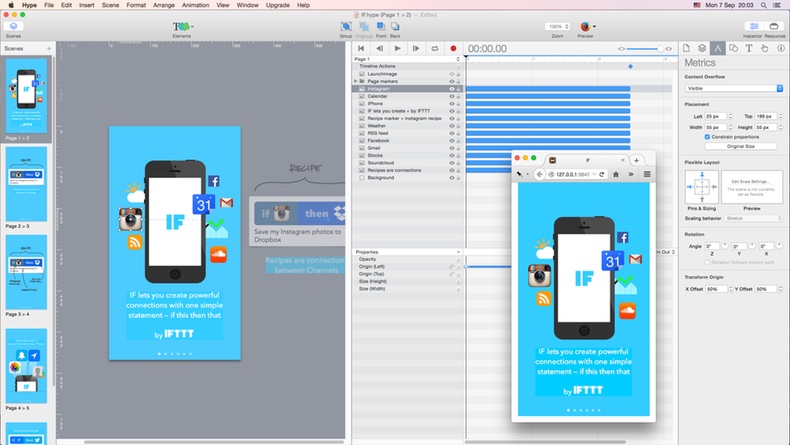
Eight Prototyping Tools Compared: Proto.io, Pixate, Framer, Origami, Form, Principle, Flinto for Mac, and Hype - Sketch App Sources Blog

This is another fully packed system that enables creating mobile mockups and prototyping the same. Principle presents designers with animation tools that are created on iOS and macOS engine, Core Animation. This makes it easier to illustrate and to apply the same on a working prototype. Designers can either select transitions from stock features or can simply create custom responses for UI. Users are allowed to import designs from the major tools and then further export animations that could be used by the developing team.


Framer X

This enables designers to quickly prototype their idea in a responsive layout. This is free, and it has one of the most developed digital stores for the purpose of third-party integrations via multi-platform plugins. It’s features and tools are curated by the Framer development community. Since the Framer system is a little advanced, it is not desirable for designers with no coding knowledge. Creating and coding prototypes at a decent level would be only possible for those with at least a little web coding knowledge.


After Effects


From the highest positioned design company Adobe, comes their animation app, After Effects. This app isn’t a prototyping tool in itself, rather it’s key point is that it offers a lot of control for creating motions and animations for media-intensive apps. Users can engage with other files from Adobe and can export their animation for using it in a mockup or prototyping.


Mockup Tools

A mockup tool allows a designer to build synthesised images for a mobile app or website in a short span of time. While mobile app prototyping enables receiving quick feedback, mobile app mockup and wireframe tools allow designers to create visuals for a project much quicker.

Let’s take a look at some top mockup tools;


Sketch

Although Sketch can also be employed for prototyping mobile apps, it’s main ability rests in creating consistent mockups. Like Framer X, this also has a large store for plugins maintained by a developing community. This mobile app mockup tool has a collaborative feature that makes it easy for designers to link with others working with them on the project and to receive feedback.


Figma

The Power of Figma as a Design Tool | Toptal

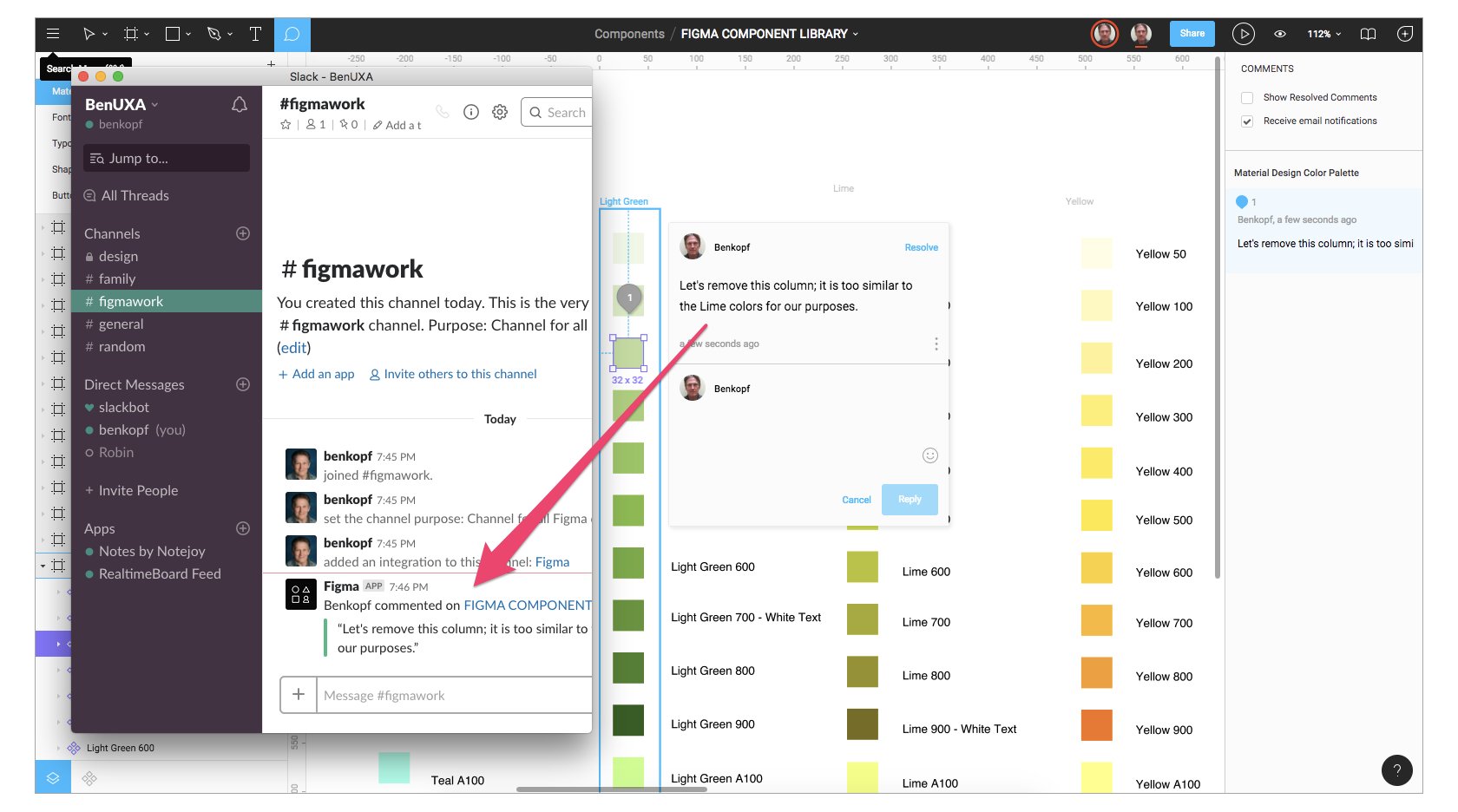
Figma is a cloud-based system, made for the purpose of collaboration between design teams for creating mobile app mockups. This comes with two bonuses, first that it also includes prototyping tools and second, the mobile app wireframing tools are free to use! The collaboration element in Figma is considered one of the best as it allows feedback to be left in the context without any interruptions. It’s almost like working in Google Docs but the difference is that this better accommodates feedback on design keys.

 

Adobe XD

Adobe XD does collaborative editing now, just like Figma - The Verge

We all know Adobe is the most famous when it comes to creating, designing apps/websites. Adobe XD also has a great collaboration feature that lets you work with other designers and teams on the platform. Since it integrates with other creative cloud softwares, hence, one gets a fine experience when using files from other apps like After Effects or Photoshop.


Proto.io

Proto.io Pricing, Alternatives & More 2021 - Capterra

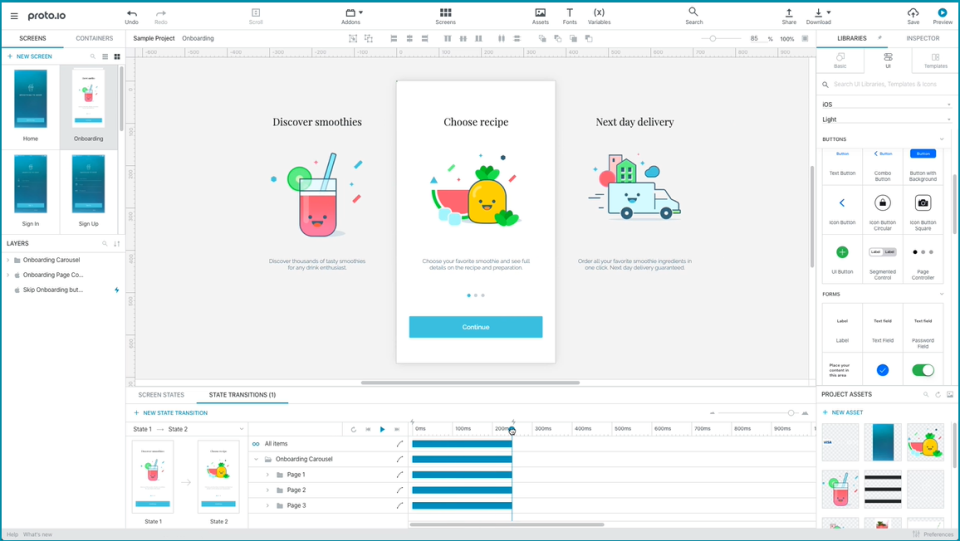
Proto.io is also a web-based mockup software and contains mobile app prototyping tools as well as mobile app wireframing tools. The best part is, it is a no-code solution, so designers that have zero to little knowledge about coding find it easier to work on this platform. This also works well with Sketch and Photoshop.


Simulify

Simulify Platform Online and Windows,

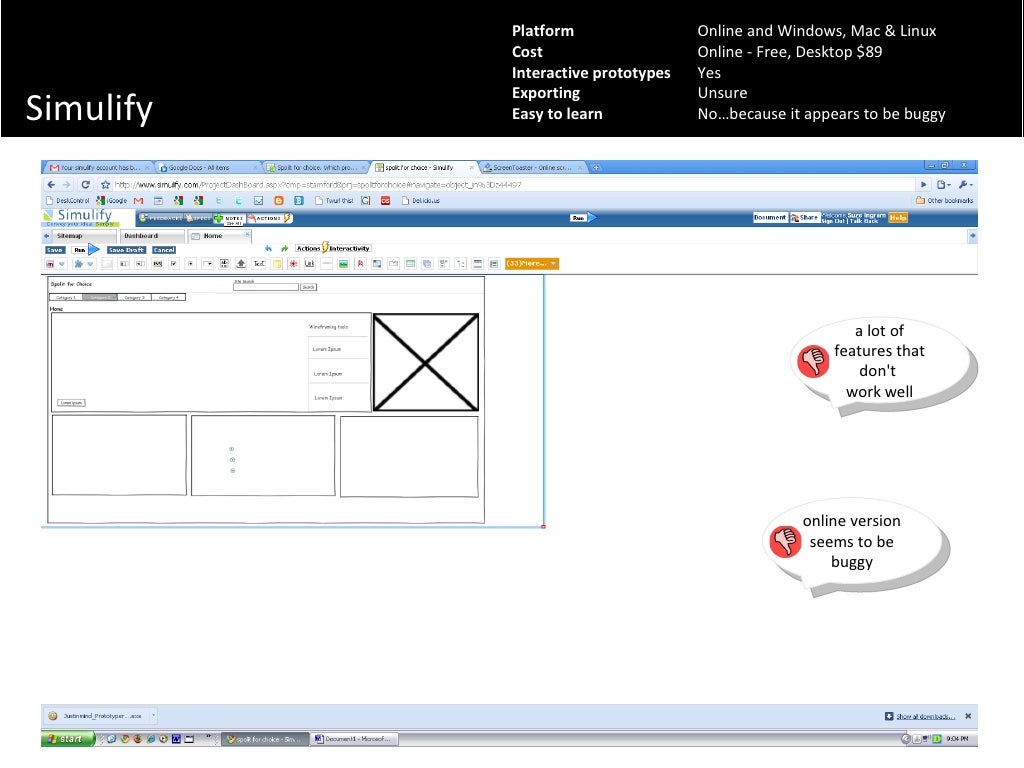
This is designed to assist with visual mockups for sites via JAMstack. For messed and decoupled architectures, where you are constantly pulling data in and out from multiple apps/websites, Simulify is the ideal option. The Simulify system amalgamates with Gatsby which is ideal for using modern development frameworks.


We’ve provided you the top choices and now the ball is in your court. Choose wisely!

EOS vs Ethereum: Which is the Best Smart Contract Platform

Ethereum vs EOS | Comparing Two of the Biggest Dapp Platforms - UNHASHED

Getting into agreements in a sans Blockchain world involves an active participation – which comes attached with a price tag – of intermediaries, something that in one way or the other limits the horizons a business can reach in terms of extending their business relations. Cut to the era of Blockchain. Blockchain, along with its sidekick Smart Contract enable businesses to develop a decentralized ecosystem that allows them to make agreements without the involvement of any third party intermediary – Ergo, New Horizons now comes into the picture for Businesses to penetrate in.

Although Smart Contract seems so have received its fair share of hype only after it came under the shadow of Blockchain Technology, the concept had already made its appearance twenty years ago when Nick Szabo, a cryptographer wrote an article about it.

So what are Smart Contracts exactly?

Smart Contract is a computer program that is stored inside a Blockchain. They are coded in a way to automatically control asset transfer between two (or more) parties, when the predefined conditions are met.

What is a Smart Contract Platform Supposed to Do?

Smart Contract Development Company India | SignitySolutions

A Smart Contract Platform is a platform which provides support for creation and execution of smart contracts. There are many names in the list of smart contract platforms in the market today – Ethereum, EOS, NEO, Hyperledger Fabric, Cardano, Stellar etc.

Out of all these platforms, today we will be focusing our attention on the oldest and most adopted – Ethereum and the new and hyped platform, which claims to be more efficient than Ethereum – EOS.

In this article, we will be comparing the two powerful platforms – EOS vs Ethereum – head on to fathom which platform has the potential to go farthest.

Both EOS and Ethereum are Turing complete Smart Contract Development Platforms that are leveraged by businesses for Smart Contract and Decentralized Applications Development. While Ethereum charges gas fees in form of Ethereum currency for allowing businesses to run their Apps or Smart Contract on their platform on per transaction basis, EOS charges some EOS cryptocurrency only at the initial stage and don’t charge any network development or transaction fees.

Ethereum

Ethereum cheat sheet: Everything you need to know - TechRepublic

Ethereum is an open blockchain platform that allows developers to build and execute Smart Contract on Blockchain. To enable blockchain app developers to implement smart contracts on Ethereum, the platform has launched its own contract oriented programming language called Solidity.

The platform uses the proof-of-work consensus algo, which it plans on upgrading to the proof-of-stake consensus.

Ethereum, aside from being the leading smart contract and decentralized application development platform, also has its Ethereum cryptocurrency platform called Ether.

EOS

What Is EOS?

The brainchild of Daniel Larimer (the name behind Graphene Technology and the first developer to have implemented the POS consensus), EOS platform works on a similar model like Ethereum but comes with a number of differentiating factors.

EOS makes it possible to process greater number of transactions on a per second basis than Ethereum. The platform, feature wise, is a lot more scalable and includes elements like sharding, plasma, and the comes with the benefits of the proof of stake (dPoS and TaPoS) consensus.

Like Ethereum, EOS has its own EOS cryptocurrency platform as well, named after the platform itself – EOS Cryptocurrency

With this, you are now up to speed with what both the platforms are and now (finally) it’s time to get on to what we came here for – to answer the question on every Blockchain enthusiast’s mind ‘EOS vs Ethereum: Who Will Win the Title of Best Smart Contract Platform’

EOS vs Ethereum

1. Design Philosophy

How to migrate a smart contract from Ethereum to EOS- The Cryptonomist

Ethereum

Ethereum has been developed as a neutral platform. It doesn’t come packaged with features, which allows users to develop their own feature based sub-protocol within a contract. This prevents instances of bloating in an application.

EOS

EOS comes with functions like app/blockchain communication tools and cryptography implementations. It features a range of different options varying from web toolkit to help with interface development to the self-describing database schemes.

2. Governance

Why good governance is essential to infrastructure | Infrastructure Investor

Ethereum

Ethereum is presently working on a Proof-of-Work consensus with the plans to move to a hybrid of Proof-of-Work/Proof-of-Stake. Ethereum makes it mandatory for developers to adhere to the code and solve major disagreements through forks.

EOS

EOS uses Graphene technology that makes use of the delegated Proof-of-Stake (dPoS and TaPoS) consensus. For resolution of disputes, EOS will come with la egally binding constitution which would establish a common jurisdiction.

3. Scalability

Ethereum

Ethereum network has till date achieved around 25 transactions per second and it can increase to upto 50 to 100 tps.

EOS

EOS has been able to achieve over 10,000 to 100,000 transaction per second in stress testing. The platform, which is based on Graphene technology, uses parallelization to enable scalability and for allowing million of transactions to run together per second.

4. Network Fees

Ethereum

Ethereum charges fees, in the valuation of Ether (the Ethereum Currency), in return of using storage, calculation, or bandwidth. The required fees in Ethereum fluctuates and the miners are given the option of selecting transactions that depend on the fee size.

EOS

EOS will make of ownership model, where the EOS token holders will get a proportionate share in storage, network bandwidth, and in processing power. They will have the provision to upgrade by buying more EOS.

EOS platform though, will charge zero network development and transaction fees. Users will only have to purchase the EOS token in the initial phase.

5. Denial of Service

Government websites infected with crypto mining malware | Synopsys

Ethereum

In Ethereum, Miners select the high fees transactions for adding them to Blockchain and since there is a limited bandwidth and computing power, probability of low fee transactions getting blocked out are very high.

EOS

Ownership of EOS tokens gives the users a proportional stake in storage, network bandwidth, and the computing power. In EOS, even the startups that have a very little stake invested in the platform also get guaranteed, reliable computational power and bandwidth.

So here were the points of difference that define the underlying ecosystem of both EOS and Ethereum.

Seeing this, it is safe to assume that EOS, once fully functional and adopted, holds the potential to replace Ethereum in the near future, if the latter doesn’t introduce updates to make its platform more user centric instead of profit centric.

While that is about the future, if Ethereum wants to come points ahead of EOS sooner, it will have to make amendments in its architecture by introducing features akin to Operating system architecture of EOS. In fact, the DOS incident that happened back in 2016, could have been avoided completely if Ethereum was indeed an Operating System and not a state machine.

While saying EOS will replace Ethereum in the coming future is still a statement less of surety and more of probability, the differentiating factors that EOS comes packaged with, bring the platform very close to winning the race to becoming the best smart contract development platform.

EOS Features that Bring it Points Ahead of Ethereum

1. Zero Transaction Fees for End Users

0 Number PNG Transparent Images | PNG All

While EOS users should own or rent some cryptocurrency to use the platform, they don’t have to pay anything to perform a transaction. A factor that works in favour of the B2C users, who no more have to pay to make transactions on their decentralized applications.
Also, since there is no entry fees, businesses that lack the technical know how can also confidently enter the world of Smart Contracts.

2. Scalability

The transaction per second number that EOS is aiming for is far more than what is offered by Ethereum. While in case of Ethereum it is 15 tps, EOS stands at 1000 – 6000 transactions per second.

EOS uses asynchronous communications and separate authentication from the execution itself to achieve speedups.

3. Governance based on Stake

Differing opinions about parliamentary hearings on bank frauds | IPN

EOS Cryptocurrency Holders have the right to vote on a change of protocol, with the vote count being proportional to the amount of cryptocurrency that they hold.

Are these differentiators enough to validate that Ethereum time is coming to an end? Is Ethereum passing the baton to EOS? Well…. Not in so many words.

It has now become a matter of time. If Ethereum is able to work on its obvious scalability issues and act on its image – that although it works great, it works on a limited scale – through updating its ecosystem while there’s time, it will survive the race.

For now, we will have to leave it on time to declare the clear winner of this smart contract race. Because the current state of both the platforms are that there are some decentralized applications that will need the speed and scalability that EOS offers and there are some that would need the privacy and censorship resistance that Ethereum offers.

error: Content is protected !!